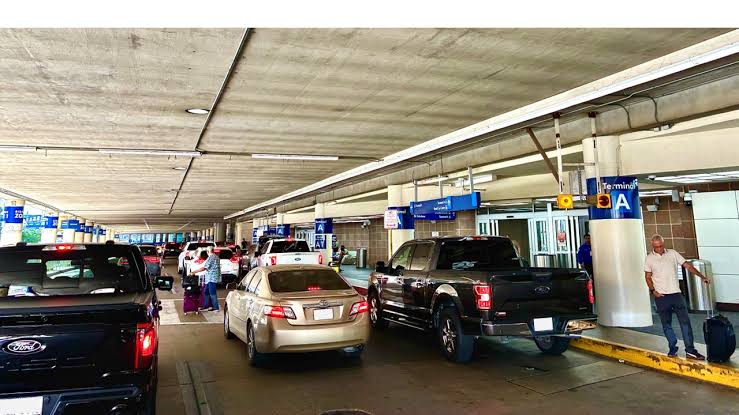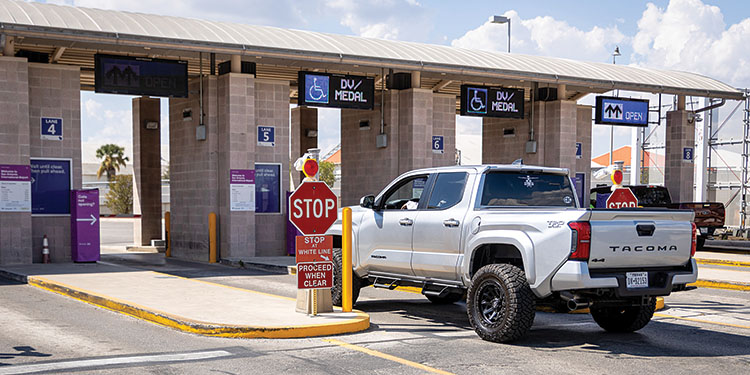

In recent years a wave of new entrants has crowded into the license plate recognition market, most of them handheld or smartphone based. On the surface they look appealing: flexible, quick to deploy, and remarkably cheap. Some vendors now give the software away entirely, bundled into a broader enforcement contract. Free is a powerful word in a budget meeting. But a plate read on its own tells a city nothing about dwell times, peak violation hours, or how the curb is actually being used. That visibility takes more than a camera that reads a number. This article explains why free license plate recognition quietly costs cities more than it saves, and what context-aware curb enforcement does differently.
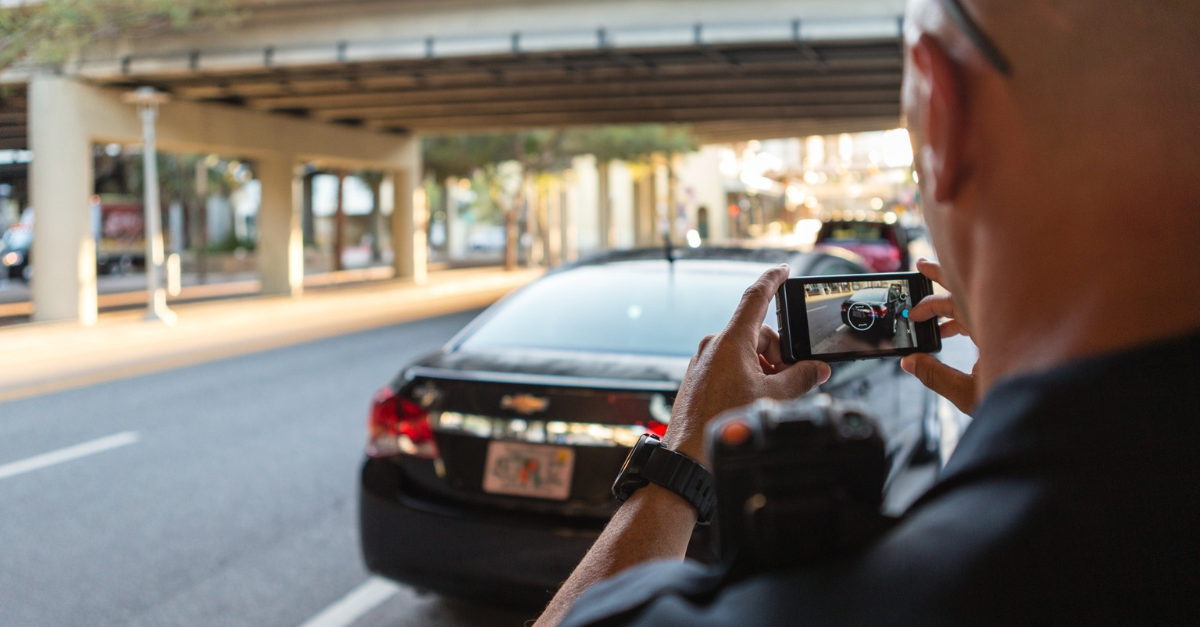
Why are LPR vendors giving the software away?
License plate recognition vendors give the reader away because the core capability has been commoditized: matching a plate against a hotlist is now cheap to build, so price is the only lever many vendors have left. The plate reader becomes a loss leader, handed over to win the contract that sits around it: the payments, the permits, the ticketing platform, the multi-year lock-in. The city is not really getting enforcement for free. It is trading long-term visibility and flexibility for a low number on the first invoice.
There is nothing wrong with a low price. The problem is what a plate-only reader cannot do, no matter how many cities deploy it. It confirms that a specific vehicle was in a specific place. It does not describe the curb around that vehicle: how long cars are staying, when pressure peaks, which blocks turn over and which never do, where the rules are quietly breaking down. A city that buys on price alone often discovers, a year in, that it has automated ticket writing without gaining any of the curb intelligence it actually needed.
What does free LPR actually cost a city?
The real cost of free LPR is not on the invoice. It shows up as drained officer time, avoidable public friction, and a curb the city still cannot see. Each of those is more expensive than the license fee a vendor waived.
Officer time goes first. A plate-only workflow still leans on people to interpret, chase, and defend each notice, so the promised efficiency never fully arrives. Public friction comes next. Roadside stops and thin evidence invite disputes, and every disputed ticket is staff time spent twice. And underneath both is the visibility gap: with no dwell, occupancy, or turnover data, the city cannot answer the questions that justify its own program, from where to focus patrols to whether a rate change actually worked. A free reader that leaves those questions unanswered is not a saving. It is a deferred cost.
Are vehicle-mounted LPR systems any better?
Vehicle-mounted systems are better than handhelds at raw coverage, because a car can sweep far more curb in a shift than an officer on foot. But coverage is not context. If an in-vehicle or on-roof camera still only reads plates, it inherits the same blind spot at a larger scale: more reads, the same missing picture of how the curb is behaving.
The distinction that matters is not handheld versus vehicle-mounted versus fixed. It is plate-only versus context-aware. A city can run all three form factors and still be blind if every device does nothing but match a number. The question to ask a vendor is not how fast the camera reads, but how much of the scene it understands.
What makes context-aware enforcement different?
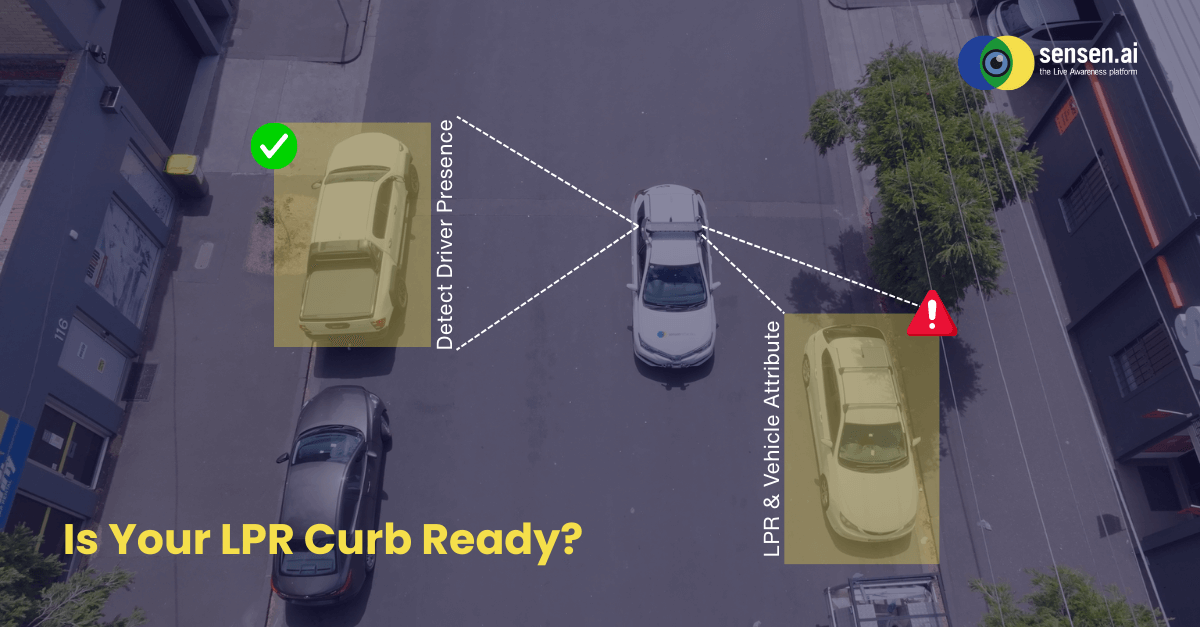
Context-aware enforcement reads the whole scene, not just the plate: the vehicle, its position against the curb, the rule that applies at that spot and time, and the evidence that proves the case. That is what SenSen’s curbside enforcement platform, delivered through SenFORCE, is built to do on a single pass.
Instead of returning a plate and a timestamp, a context-aware pass returns a defensible record: what the vehicle was doing, where, under which rule, with the imagery to support the notice. SenFORCE uses a patented pre-built visual model to recognize the streetscape and the rule in force, so the system understands the difference between a legal stop and a violation rather than leaving that judgment to a later manual review. Enforcement stays human-led throughout. The platform detects and evidences; a person makes the decision. The officer is freed from the repetitive parts of the job to focus on the calls that need judgment.
What does a city see once the curb is readable?
Once enforcement also senses, the curb stops being a blind spot and becomes a live dataset. The same pass that writes a defensible notice also records occupancy, dwell, turnover, and where pressure is building, so compliance becomes a scoreboard the city can actually read.
That is the layer a free plate reader can never deliver. With continuous curb awareness, a city can see that a loading zone is blocked every weekday at 8am, that a block turns over twelve times a day while the next one never clears, or that a rate change shifted behavior on one corridor but not another. SenPIC extends the same awareness to priority blocks with always-on fixed cameras, so the busiest curb is watched continuously rather than only when a patrol passes. The point is not more tickets. It is a curb the city can manage on evidence instead of anecdote.
How do cities move beyond plate reading?
Cities that have moved past plate-only enforcement did not rip out what they had. They added context on top of the patrol they already run, so the vehicles already driving the network started returning a richer record. That is the practical difference between a rip-and-replace project and an upgrade.
The City of Pittsburgh built ticket-by-mail on this approach, using evidence-grade capture to enforce the whole curb while keeping officers out of roadside confrontation. Chicago runs mobile enforcement at city scale on the same platform. The City of Las Vegas uses continuous curb awareness to see its busiest blocks. Different starting points, one pattern: keep the fleet and the officers, add the context, and let the curb become visible. For a city weighing a free reader against a platform that sees, the honest comparison is not price against price. It is a plate against the whole curb.
Why this matters now
As readers become free, reading a plate stops being a differentiator. Every vendor can do it, which is exactly why they can give it away. The question that now separates one city’s program from another is no longer whether it can read a plate, but whether it can see and manage its curb. Cities that treat enforcement as sensing, not just ticketing, come away with a living picture of their most contested public space. Cities that chase the lowest invoice come away with a faster way to write the same blind tickets. Free LPR is not the bargain it looks like. Context is the thing worth paying for.
FAQ
What is license plate recognition (LPR)?
License plate recognition is technology that reads vehicle number plates from camera imagery and matches them against a list, for example to identify an overstay or an unpaid fine. It is the baseline capability behind most parking enforcement, but on its own it only confirms a plate and a time. It does not describe curb occupancy, dwell, or how a block is being used.
Does free LPR software save cities money?
Rarely, once the full picture is counted. A waived license fee is usually recovered by the vendor through the surrounding payments or ticketing contract, and a plate-only workflow still consumes officer time, invites disputes, and leaves the city without the curb data it needs to run its program. The saving on the invoice is often smaller than the cost it defers.
What is context-aware curb enforcement?
Context-aware enforcement reads the whole scene rather than just the plate: the vehicle, its position, the rule that applies, and the evidence for the case. It produces a defensible record per notice and, on the same pass, the occupancy and dwell data that turn enforcement into curb intelligence.
Does SenFORCE replace parking officers?
No. SenFORCE takes the mechanical load off officers by detecting and evidencing curb events automatically, but enforcement stays human-led. A person reviews and makes the decision. Officer time moves from repetitive capture to the judgment calls and community work that need a human.
Can context-aware enforcement work with a city’s existing vehicles?
Yes. SenFORCE mounts on vehicles a city already runs, so an enforcement patrol or another fleet vehicle can collect context on routes it already drives. Cities can add fixed cameras such as SenPIC for continuous awareness on priority blocks without replacing their existing operation.
SenSen works with cities across North America and beyond on curb and parking intelligence: enforcement that also senses, so the curb becomes visible. Explore live curb awareness, see how curbside enforcement works, or start at the Curb and Parking Intelligence hub.