The camera is the easy part of the decision. Everything around it will shape your program for years.
When a curbside program stalls a year after go-live, it is almost never because the cameras stopped working.
It stalls because the enforcement team never used it. Or IT would not allow plate data off the airport network. Or the vendor’s definition of dwell did not match the airport’s. Or the system produced numbers nobody could match to the ground transportation invoices.
The equipment worked exactly as demonstrated. The setup around it did not fit the airport.
More large and medium hubs are now evaluating curbside management. Most evaluations focus on detection accuracy. That is a fair place to start and a poor place to finish.
Is detection accuracy the right thing to compare?
Every serious vendor can read a plate and identify a vehicle type. The real differences show up in what happens around that read.
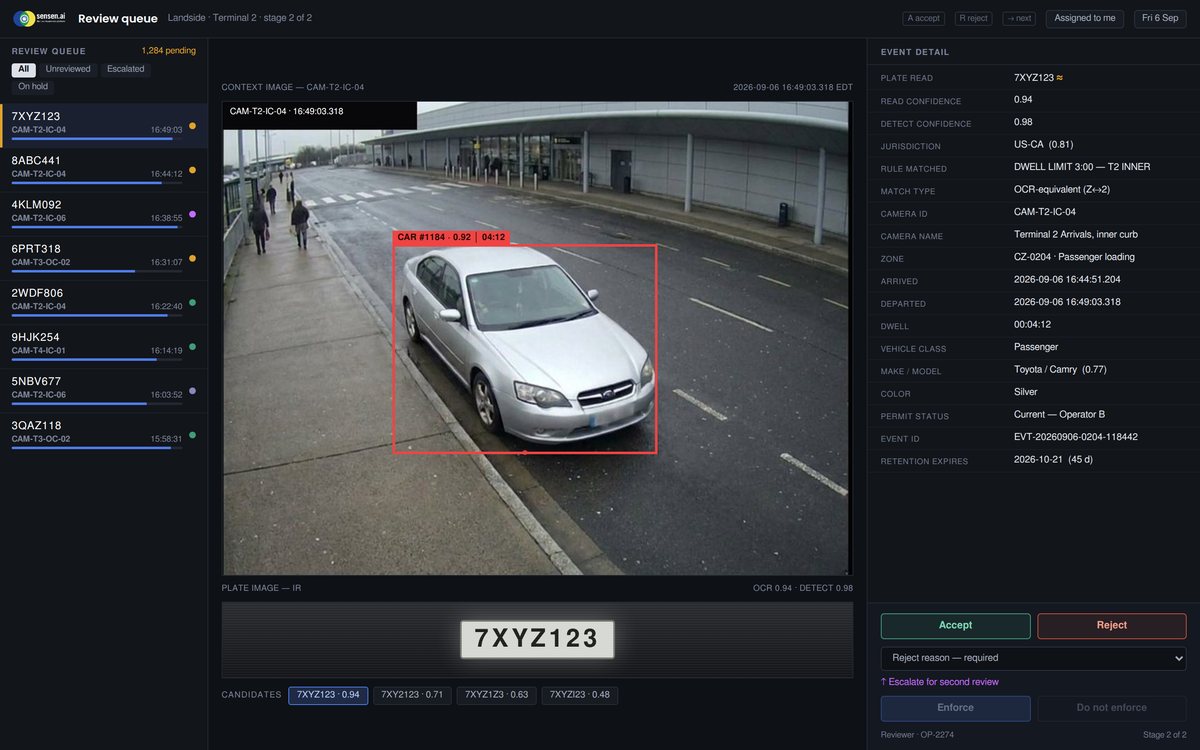
Ask how dwell is calculated. If dwell comes from a single camera read, one missed frame in rain or glare can reset the clock or lose the vehicle. If dwell is measured as a session — this car arrived at this time and left at that time — the number survives bad conditions. Your curb has bad conditions.
Ask about night and weather. Detection quality drops with visibility on every camera system, including ours. A vendor quoting one accuracy figure for all conditions is quoting a lab. The better answer is a pilot on your own frontage.
Who defines what counts as a curbside violation?
Two systems can watch the same lane and disagree about what happened, because they were set up against different rules.
Does the clock start when the car stops, or when it enters the zone? If a car moves ten feet and stops again, is that one stop or two? Does a permitted shuttle in a loading zone get the same limit as a private car?
These are airport policy questions. A vendor who arrives with fixed definitions is asking you to adopt their rules. A vendor who configures to your zones, limits and vehicle types is fitting the system to how you already work.
In practice, agreeing limits and zones with your operations team takes longer than the install. Any vendor timeline that skips that step has not done it before.
Can airport curbside data stay on the airport’s own network?
Airport IT teams have strong views on license plate data. Those views often decide whether a curbside program goes ahead at all.
Ask early:
- Can processing run on the camera itself?
- Can it run on a server inside the airport network, with no plate data leaving it?
- Who sets the retention schedule — you or the vendor?
- Is anything a driver can see masked by default?
A cloud-only vendor will be rejected by some airports on policy grounds, however well the product performs. Find that out in the first meeting, not the fourth.
Does curbside monitoring require new poles or trenching?
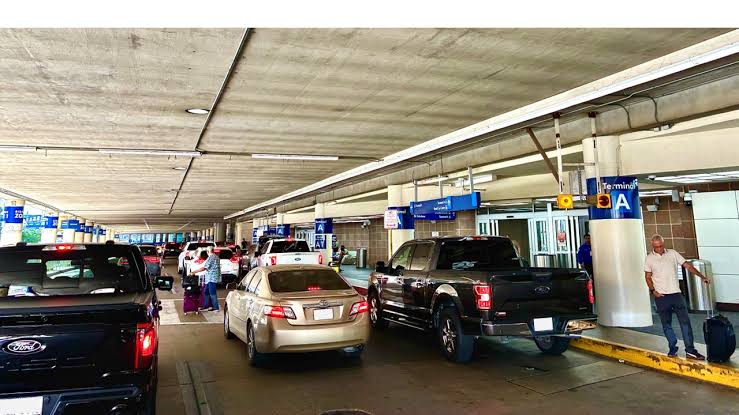
The camera is rarely the expensive part. The pole, the trenching, the power run, the lane closure and the traffic plan are.
Ask directly whether the install needs new poles, trenching, road closures or civil works. Ask whether your existing camera feeds can be used, because many airports already have coverage they are not using.
And ask whether the units can be moved. Being able to relocate hardware from one terminal to the next, once the first terminal is under control, is worth more than it sounds. It turns a capital project into a phased operating one.
A thirty-minute install with no trenching is a very different purchase from a construction job.
Who decides whether a curbside citation is issued?
This is the question that stalls curbside programs internally more often than any technical issue. Who decides whether a ticket is issued?
The honest answer is that detection and evidence are automated, and the decision is not. Alert-only is a normal way to run this. Many airports adopt it and stay there for good. The gain comes from officers arriving in the right place with evidence in hand, not from writing more tickets.
Airports that do want to go further should be able to, on their own timeline, through their own back office or an existing processing partner. If full automated ticketing is required for the platform to work, you have bought a policy along with the software.
Ask what the vendor says about enforcement staff, too. The honest answer is redeployment, not replacement. Officers spend the shift differently, not fewer of them. A vendor promising headcount cuts is creating a problem you will have to manage after signing.
How does a curbside platform fit with systems an airport already runs?
A curbside platform that cannot talk to your other systems becomes a second screen nobody opens.
Ask how detection reach your permit register. Ask how evidence reaches your back-office review process. Ask how the numbers reach reporting and finance.
Ask also whether operators need to sign up or fit transponders first. A scheme that depends on the companies being measured is a slow start.
The commercial question most evaluations miss
Enforcement is the obvious use case. Revenue assurance is usually the bigger one, and it is often missing from the scoring.
Parking and ground transportation now make up 46% of non-aeronautical revenue at North American airports. Per-trip fees are usually invoiced on trip counts supplied by the operators being billed.
So ask whether the system can produce an independent count of commercial trips by operator, by zone and by hour. That is the number you can set against an operator’s invoice.
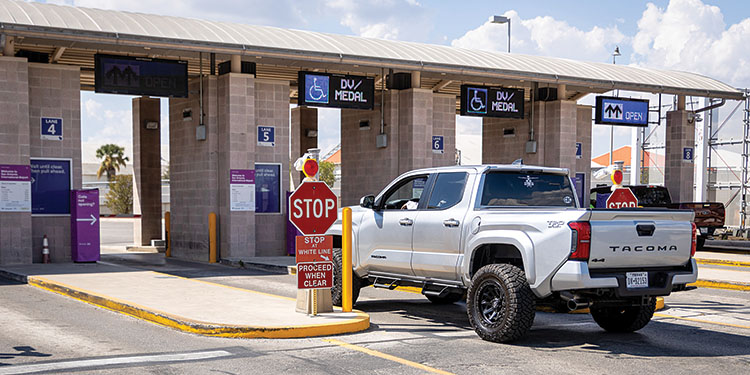
Ask too whether trips can be tied to a specific zone. Several airports are moving to charge more for the closest lane. LAX approved $12 at its central terminal and $6 at the Ground Transport Center in March 2026. Two prices without zone-level data create a loophole, not an incentive.
A checklist before you sign
- Dwell measured as a session, not a single read
- Zones, limits and vehicle types set to your policy
- Edge or on-premise processing, with your retention schedule
- Plate masking on anything a driver can see
- No trenching, no new poles, no lane closures
- Hardware you can move as the problem moves
- Alert-only supported permanently, not as a trial phase
- Independent trip counts by operator and zone, exportable to finance
- Detections and evidence flowing into systems you already run
- A pilot on your own frontage before any accuracy claim is accepted
How SenSen answers these questions
SenSen’s airport landside operations platform is an existing capability adapted to airports, not a purpose-built airport product. That shapes most of the answers above.
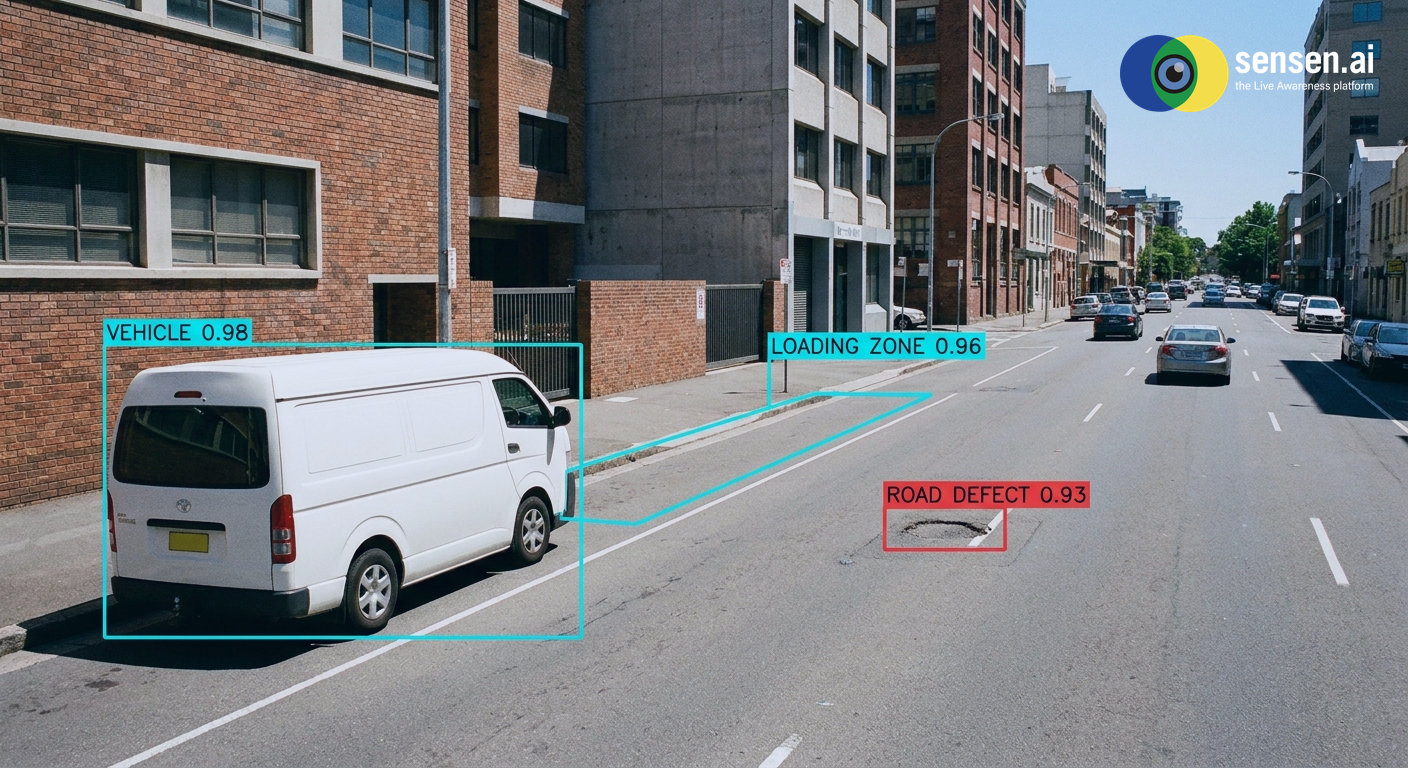
It works with existing camera feeds, portable fixed units and pole-insertable devices that install in under thirty minutes, with no trenching or lane closures. Processing runs at the edge or on a server inside your network. Dwell is measured as a session. Zones, limits and vehicle types are set to your policy. Plates are masked on anything driver-facing, and full reads follow your retention schedule. Alert-only is the default, and end-to-end ticketing is available if and when you want it.
Start with the right questions
The camera is the easiest thing to evaluate and the least likely to decide whether the program works.
What decides it is whether the definitions match your policy, whether the data can live where IT needs it, whether the hardware can move, and whether the enforcement posture stays yours.
Settle those in the first conversation. Accuracy can be proven on your own curb afterwards.
Frequently asked questions
What should airports ask a curbside management vendor?
Ask how dwell is calculated, whether zones and time limits are configurable to airport policy, whether processing can run on the airport’s own network, what the install requires, whether alert-only is permanently supported, and whether the system produces independent trip counts by operator and zone.
Can airport curbside data stay on the airport’s network?
With some platforms, yes. Processing can run on the camera itself or on a server inside the airport network, so plate data never leaves. Airports should confirm who sets the retention schedule and whether anything driver-facing is masked by default before shortlisting a vendor.
Does curbside monitoring require new poles or trenching?
Not necessarily. Existing camera feeds can often be used, and portable or pole-insertable units install in under thirty minutes without trenching, new poles or lane closures. Deployments that require civil works change the purchase from an operating decision into a capital project.
What is alert-only curbside enforcement?
Alert-only means detection and evidence are automated but no citation is issued automatically. Violations are surfaced to an officer, who decides what to do. Many airports adopt this posture permanently, because the gain comes from officers arriving in the right place with evidence in hand.
Will automated curbside enforcement replace enforcement officers?
In practice the pattern is redeployment rather than replacement. Officers stop driving a patrol loop and start responding where violations are happening, with more time at hot spots and on passenger-facing work. Vendors promising headcount reduction create an internal problem the airport has to manage later.
Take the next step
Download the four-page airport landside brief, including the questions your team will ask.
Talk to our airport team about a pilot on one terminal frontage.