Your patrols already collect the data.
Time to put it to work.

One live operation, built from the data your patrols collect on every pass: a map that shows how every block is doing, alerts that route themselves to the nearest officer, and a record that shows what to change next.

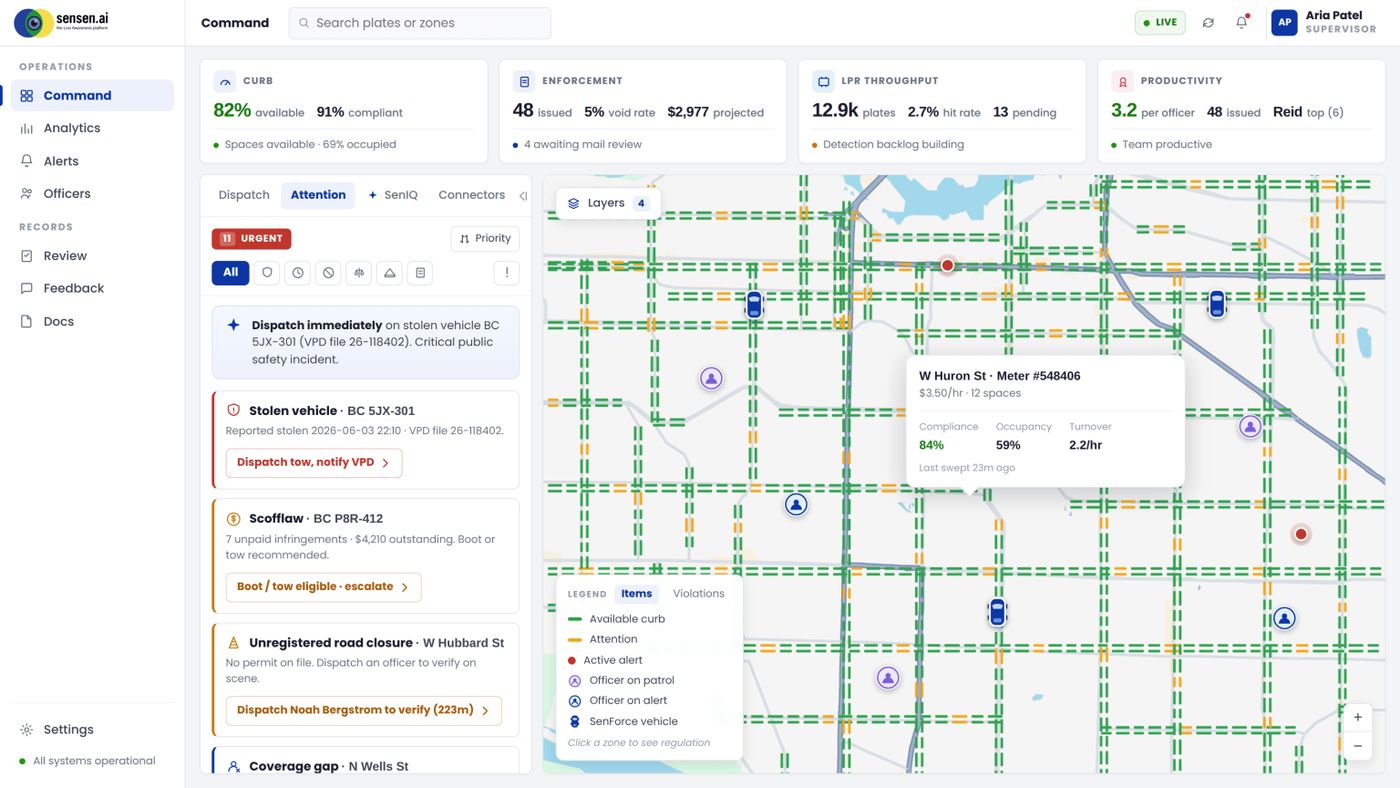
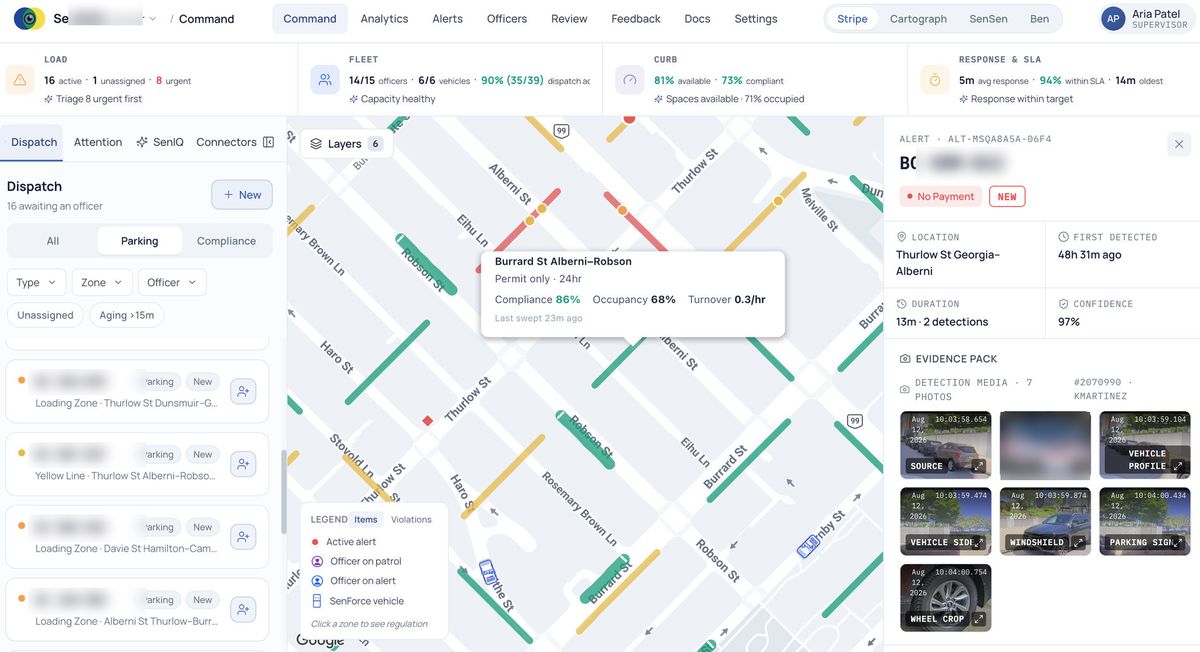
SenOPS Command: a live operations view with curb, enforcement, LPR throughput and productivity figures across the top, an attention queue on the left and a color-coded zone map

Get More from Every Pass

What changes when the map, the dispatch queue and the record work as one.

The patrols you already run become live coverage. As a result, every block they pass is on the record, every shift.
Alerts stop waiting on the radio. Instead, the evidence and the location land with the nearest officer in seconds.
The shift runs from one screen. Load, fleet, curb and response times, with what needs attention surfaced on its own.
Drift shows up by itself. Because every zone is checked against its own normal, a block that slips gets flagged without anyone looking for it.
Every action carries its evidence. In other words, photos, timestamps and reasons are logged as they happen.
Decisions get a before and an after. The street is measured every shift, so you can see whether a change worked.
SenOPS Command: the dispatch queue on the left, a zone popover showing compliance, occupancy and turnover, and an alert evidence pack with detection photos on the right
Command · Live

The Whole Operation, on One Map

Where does the shift stand right now? One look answers it.

  • Every zone is colored by how it is doing, right now. Click a block for live compliance, occupancy and turnover.
  • Meanwhile, alerts arrive with a full evidence pack attached.
  • An attention feed puts first things first: incidents on top, then coverage gaps and aging alerts, each with a one-tap action.
  • Then dispatch an officer without leaving the screen.
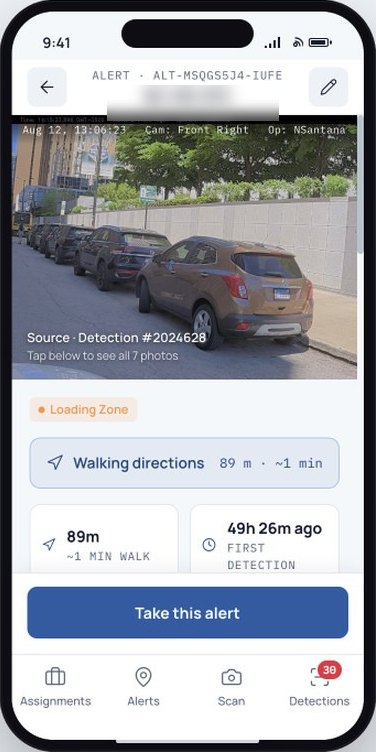
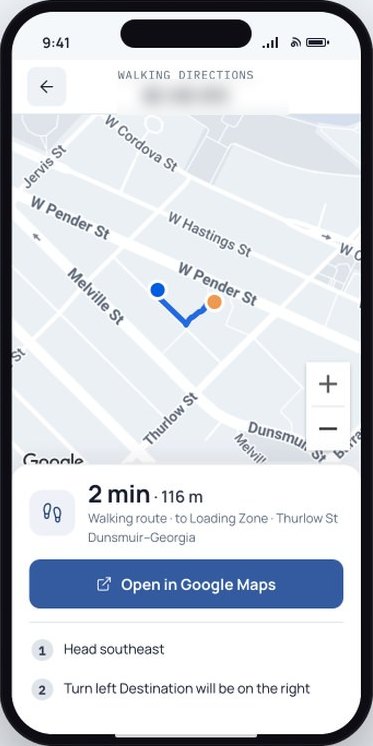
An alert on an officer's phone: the source detection photo, a loading zone tag, the walking distance and a Take this alert button
Walking directions on the officer's phone leading to a loading zone two minutes away
Dispatch · In the Field

The Nearest Officer Gets It, Automatically

When an alert needs action, SenOPS routes it to the closest officer, on their phone, with the evidence, how far away it is, and walking directions to the spot. One tap to take it, and they are on their way.

  • Thirty seconds to accept or pass, with the reason logged. If it times out, the next nearest officer gets it.
  • Officers can take nearby alerts themselves, and supervisors can assign directly. Whichever path is faster wins.
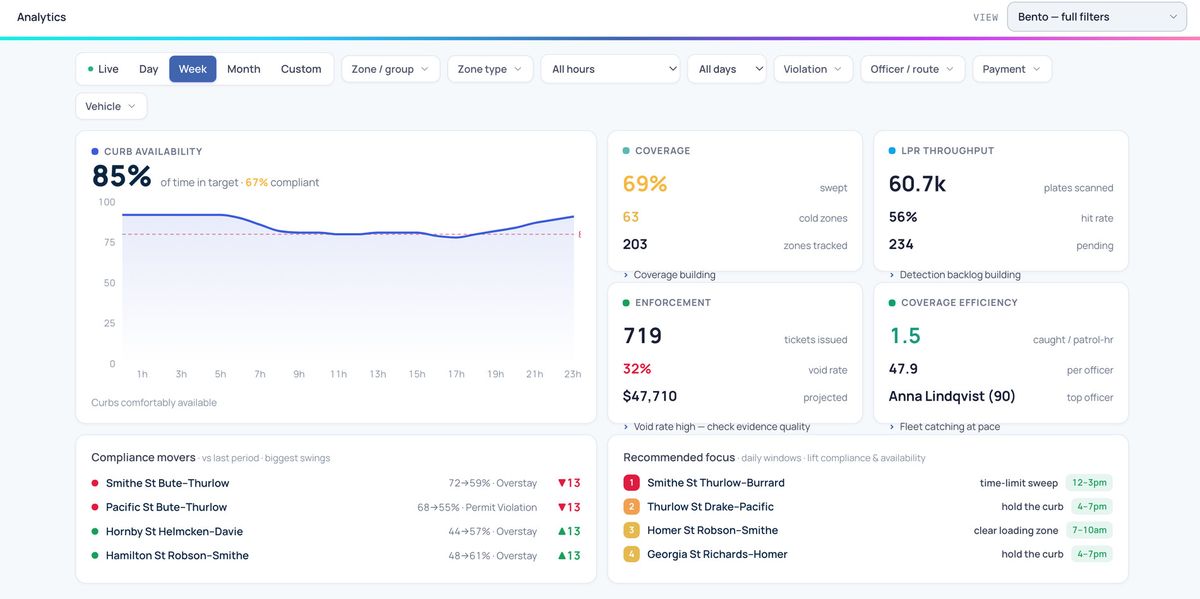
SenOPS Analytics: curb availability over the day, coverage, LPR throughput, enforcement and coverage efficiency tiles, a compliance movers list and a recommended focus list
Analytics

Is the Street Getting Better or Worse?

The street is measured continuously, so every rate, rule and staffing decision has a before and an after.

  • Curb availability tracked against the target you set, hour by hour.
  • Coverage as it really is: what the patrols swept, and the cold zones they keep missing.
  • The biggest movers, up and down, against each zone's own last period. Not a city average.
  • Recommended focus windows for tomorrow: which blocks, which hours, which action.
  • Finally, slice all of it by zone, hour, day type, violation, officer or route.
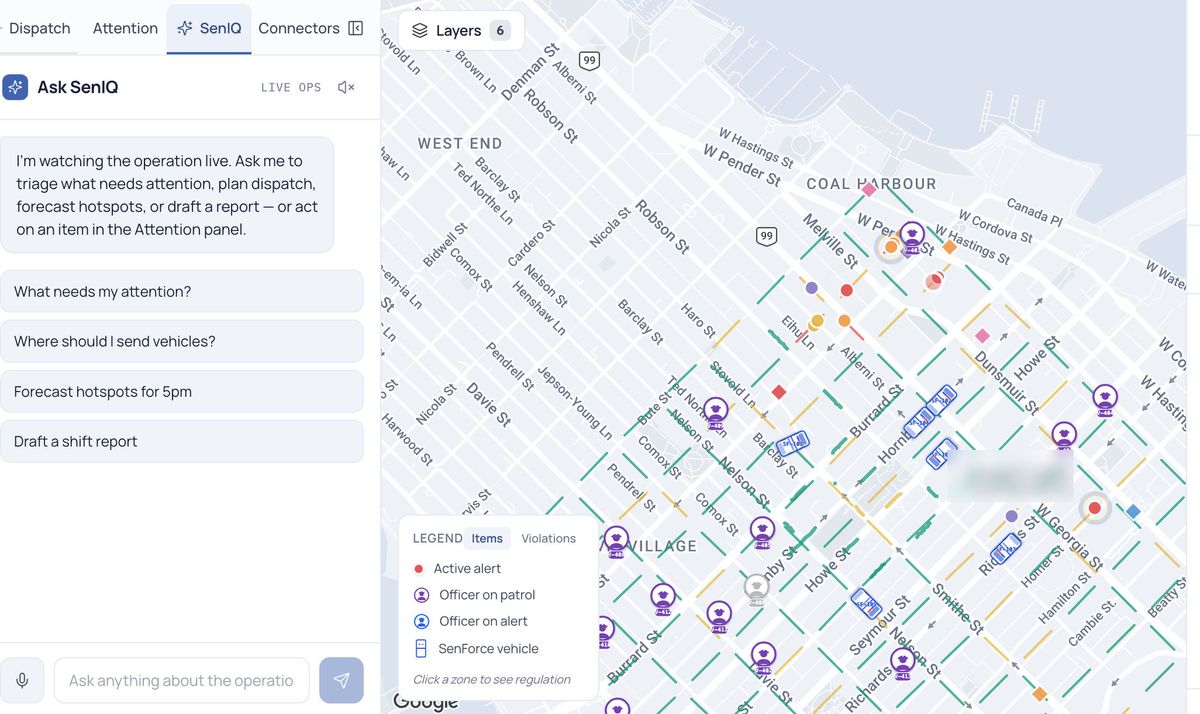
SenIQ: a chat panel offering to triage attention, plan dispatch, forecast hotspots or draft a report, beside a live map of officers and vehicles
New · SenIQ

Now, Just Ask Your Data

SenIQ watches the operation live.

  • Ask it what needs your attention, or where to send vehicles.
  • Ask it to forecast hotspots for 5pm, or to draft a shift report.
  • Type it or say it, because voice works in both directions.
  • It can pull in data from connected systems and read it alongside what your patrols are seeing.

More Than Parking. The Whole Street.

Any on-street compliance job runs through the same engine as parking: the same officers, the same live map, the same evidence trail.

Parking complaints Abandoned vehicles Illegal dumping Roaming animals Road closures Illegal signage

Jobs Arrive on Their Own

Connected city systems post requests straight into the queue. Or a supervisor raises one from a template in seconds, with the fields that job needs.

Worked Like Any Other Alert

First it is offered to the nearest officer and taken with one tap. Then it is worked on scene with photos and notes, and finally closed with an outcome that fits the job.

Inspections Become Standing Work

Additionally, a job can carry a schedule, so recurring checks and patrol beats create their own dated work instead of living in someone's calendar.

One worklist. One dispatch engine. The whole street covered.

It Connects to What Your City Already Runs

Nothing to replace. SenOPS sits in the middle of the systems you have, and data moves in both directions.

Your Records Feed the Rules

The rule engine reads what your city already keeps.

PermitsPaymentsHotlistsCurb zone inventory

Connected one at a time, starting with whatever you have.

Your Departments Post Jobs

The systems your teams already use drop field jobs straight into the dispatch queue, tagged with where they came from.

No re-keying, no separate inbox to watch.

Your Data Flows Back Out

What SenOPS sees on the street flows out to the platforms you choose, in the shape they expect.

And ask SenIQ a question, it answers across all of it.

See It on Your Streets

SenOPS runs on the patrols your city already has. In a walkthrough we will put your zones on the map and show you what a shift looks like when the map, the dispatch queue and the record work as one.

  • Your patrols, on the routes they already drive. Every pass on the record.
  • Your zones, scored live for compliance, occupancy and priority.
  • Your shift, run from one screen instead of five systems.

Prefer email? sales@sensen.ai

Already running SenSen? This is the data your team is collecting today, brought forward. We will show you what your deployment can surface right now, including the parts you may not have switched on yet.

Book a walkthrough

Tell us what you run and we will come prepared.

Questions Cities Ask

The ones that come up in every first conversation, with plain answers.

What is SenOPS and how does it work?

SenOPS is the operations platform for the patrols your city already runs. As the patrols drive, they read the street, and every pass updates a live map of how each block is doing.

When something needs action, an alert routes itself to the nearest officer with the evidence attached. And because the street is measured every shift, the record keeps building: trends, movers, and where to focus tomorrow.

Do we need new vehicles or anything in the street?

No. SenOPS runs on the patrols you already have, driving the routes they already drive. Nothing new goes in the road.

Does it change how our officers work?

Officers patrol the way they do today. What changes is what reaches them: when an alert needs action, it lands on the nearest officer's phone with the evidence, how far away it is, and walking directions to the spot. One tap to take it, and they are on their way.

Meanwhile, supervisors feel the bigger change, because the shift runs from one screen instead of a radio, a spreadsheet and three systems.

Is it only for parking?

No. Any on-street compliance job runs through the same engine: parking complaints, abandoned vehicles, illegal dumping, roaming animals, road closures, illegal signage.

Jobs arrive from connected city systems on their own, or a supervisor raises one from a template in seconds. Either way, they are worked like any other alert, by the same officers, on the same map.

What do you need from us to get started?

Read access to the records your city already keeps: permits, payments, hotlists and your curb zone inventory. They connect one at a time, and SenOPS is useful with whatever is connected first.

What about plate data and privacy?

Data is held to your city's retention periods and policies, and analytics never need individual vehicles. The trends, the movers and the planning all run on counts, rates and durations per block, not on people.

What does it cost?

A subscription that scales with the size of your operation. Tell us your fleet size and zone count and we will put real numbers to it.