Curbside dwell, double-parking and unpermitted pickups shape how every passenger starts and ends their trip. SenSen gives landside teams live awareness of what is happening at the curb, and tells them where to send their people next.
Deployed with cities, transport authorities and law enforcement agencies worldwide.














Curbside congestion creates operational bottlenecks, security vulnerabilities and passenger frustration — and landside teams are asked to manage it with patrols, radios and hindsight, while traffic volume continues to grow.
Rideshare, TNC and private vehicles dwelling well past policy time limits, with no reliable way to see it happening across every lane and terminal at once.
Double-parking and blocked travel lanes as drivers pick and drop wherever they can stop, forcing passengers to weave between moving vehicles to reach their ride.
Unpermitted operators and commercial vehicles working the curb without a confirmed fee status — compliance gaps that quietly become revenue gaps.
The same computer vision platform already running on city streets, tuned for the airport landside environment — standing up at your terminal, not sitting on a roadmap.
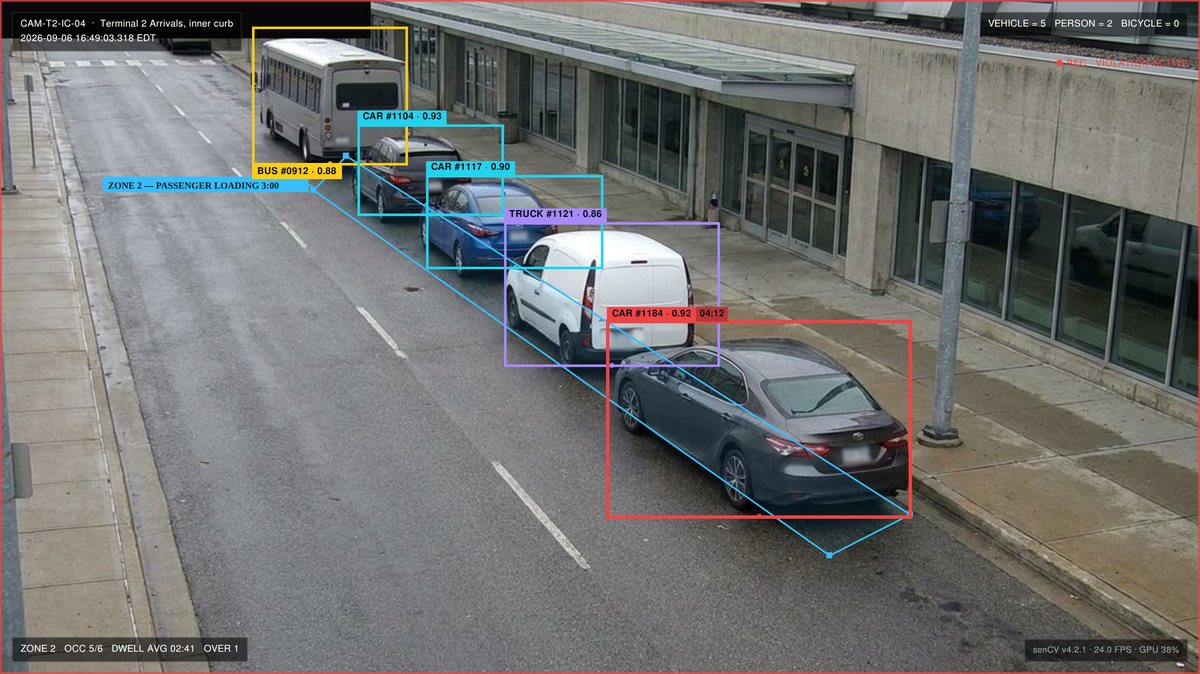
Portable cameras or the feeds you already run, capturing dwell, lane occupancy, plate reads and vehicle class — with no patrol standing there.
Hot spots by terminal and time of day, with every plate checked against your permit and trade-dress records as it happens.
Alerts route officers to live violations with evidence attached — and the citation flow can run end to end when you are ready.
You are short on people and long on frontage. Instead of digging through dashboards, ask in plain language and let the platform point you at the hour, the terminal and the lane that need you.
“Where should I deploy officers between 4 and 6pm on Fridays?”
illustrative example — copy and response format to be finalised with product
Dwell, lane utilization and hot spots broken down by time of day and terminal — the evidence base for policy changes, not just for citations.
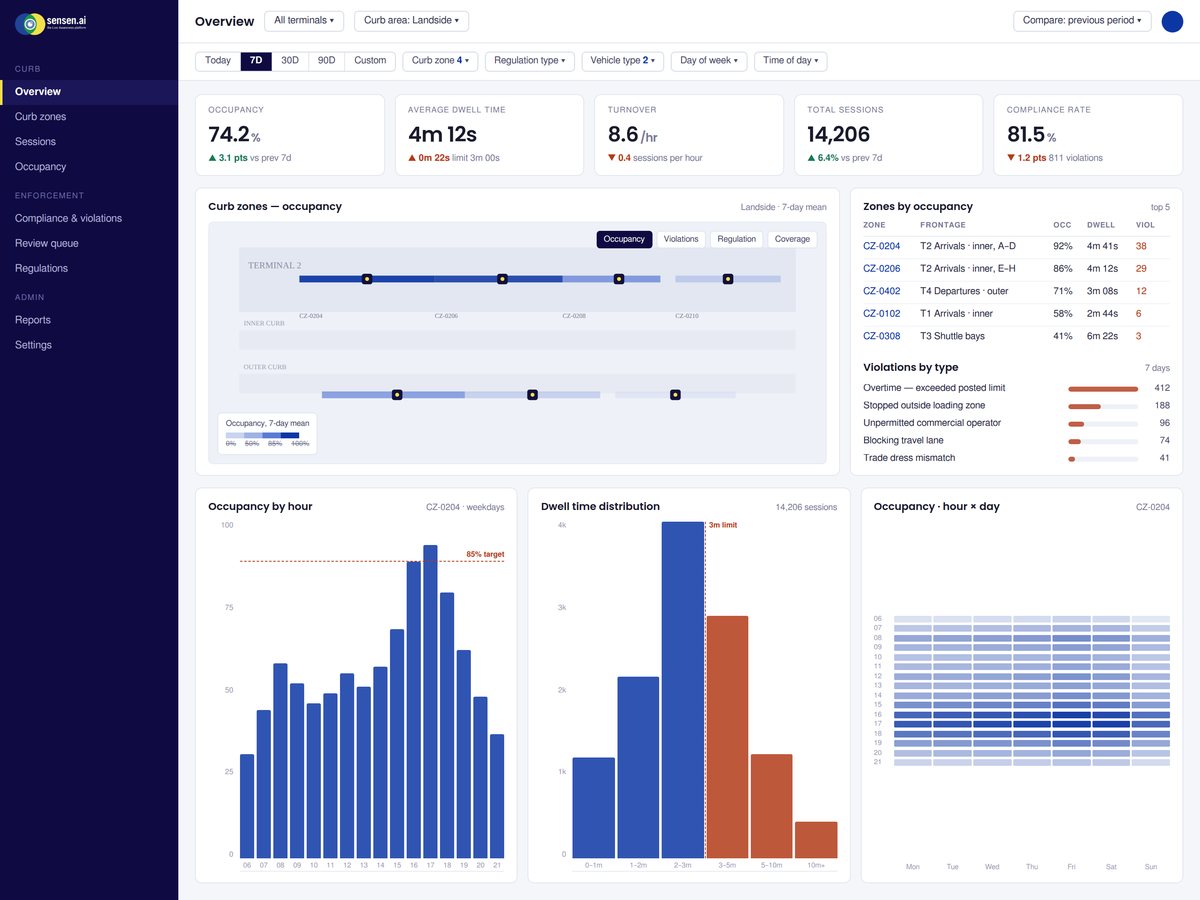
Violations surface to officers as they happen, so patrols are targeted rather than random and time is spent at the hot spot instead of on the loop.
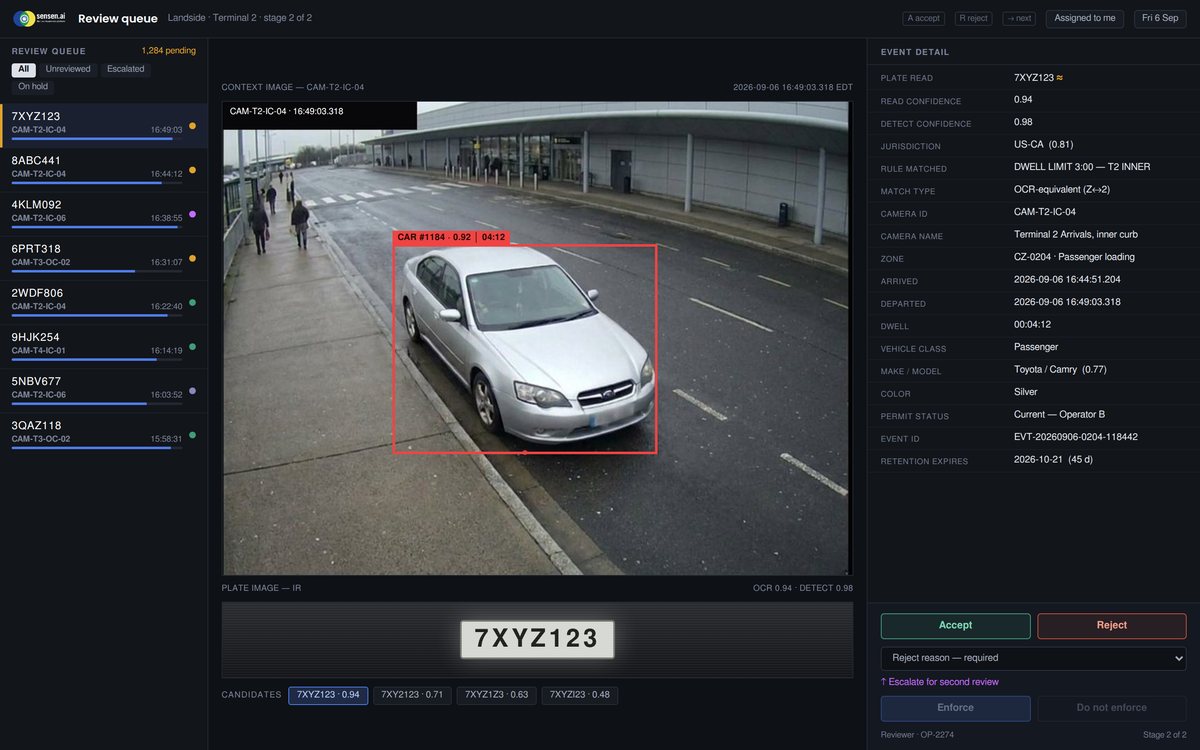
Automated plate-to-permit cross-referencing catches unpermitted and mismatched operators, and supports accurate billing for taxis and commercial vehicles.
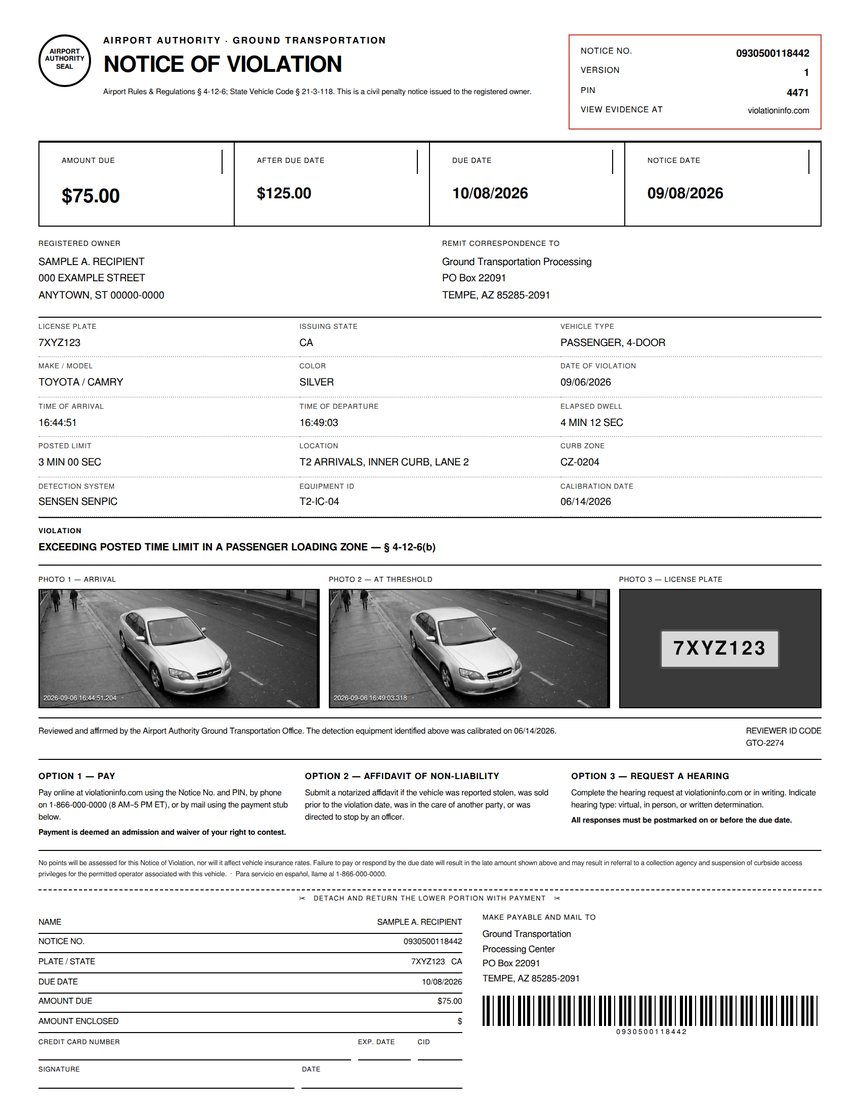
Alert-only to begin with. When you are ready, the citation flow runs end to end — on your policy, on your timeline.
A single pole-mounted camera times every vehicle at the curb, and the E-Sign beside it shows the posted limit and a live countdown — so most drivers move on before anyone has to enforce anything.
Each plate is read on arrival and a per-vehicle dwell clock starts. No manual patrols.
Elapsed dwell is compared against the zone's posted limit in real time, per lane.
The sign shows the limit and near-threshold plates, masked. Vehicles that still overstay go to an officer or the back office.
No single-vendor hardware lock-in, and no cloud requirement. Your IT department keeps the footprint it is willing to support.
Lightweight fixed units that relocate terminal to terminal once compliance targets are met at the first one.
Integrate with the cameras and network the airport already owns, so incremental capital cost stays low.
Processing on-device at the edge, or centrally on a server we install on site — full capability under strict data-residency policies.
Once the terminal frontage is instrumented, the incremental cost of asking it a different question is close to zero.
Detection across terminal frontage and curbside areas, escalated to the team that has to respond — not to a screen nobody is watching.
Falls on the frontage are a live claims exposure. The incident is flagged and the footage around it preserved, so a claim is answered with evidence rather than recollection.
Unsafe or unruly activity in queuing and staging areas, flagged while it is still a conversation rather than an incident report.
Automated enforcement on airport property is a public decision. These are the questions that decide it — answered plainly, including where the answer is “that part stays yours”.
Your officer. Detection and evidence are automated; the decision is not. Alert-only is the default posture and many airports choose to stay there — the operational gain comes from officers arriving at the right place with evidence in hand.
Where an airport does decide to go further, the citation flow can run end to end through your back office or existing processing partner. That is a policy decision on your timeline, not a condition of using the platform.
They stop driving the loop. Directed enforcement does not reduce the number of people you need on the frontage — it changes where they spend the shift. In practice officers move to the hot spot and to passenger-facing work, and the honest internal answer is redeployment, not replacement.
Detection is ANPR with vehicle classification, day and night. Detection quality falls with visibility for any camera-based system, ours included, and any vendor who tells you otherwise is quoting a laboratory number.
What matters operationally is that dwell is measured from arrival to departure rather than from a single read, so one missed frame does not lose the vehicle. We would rather show you performance on your own frontage during a pilot than quote a percentage.
Anything displayed publicly is masked. Full reads stay back-office and are retained to your retention policy, not ours. On an on-prem deployment they never leave your network at all — which is usually the answer your IT department needs before anything else can proceed.
Existing camera feeds are a supported input. Detections and evidence go out to the systems you already use — your permit register, your back-office review process, your reporting. There is no enrollment program and no transponder scheme to stand up first.
A portable or pole-insertable unit installs in under thirty minutes, without trenching or a lane closure. The longer part is agreeing thresholds, zones and workflow with your operations team — a series of conversations, not a build.
Tell us which terminals and which behavior you are trying to change. We will walk you through what the platform sees on day one, and what it can automate later.
"*" indicates required fields