As cities gain “live awareness” through continuous, contextual intelligence, they can build a live operational layer across transport networks, public spaces, and critical infrastructure.
Parking enforcement is rarely seen as a strategic capability. For most cities, it sits at the edge of operations, a necessary function tied to compliance and revenue. But that framing is now outdated.
What cities are beginning to recognize is that enforcement systems, when powered by artificial intelligence (AI), are not just regulatory tools. They are one of the most immediate and scalable ways to build real-time visibility across urban environments.
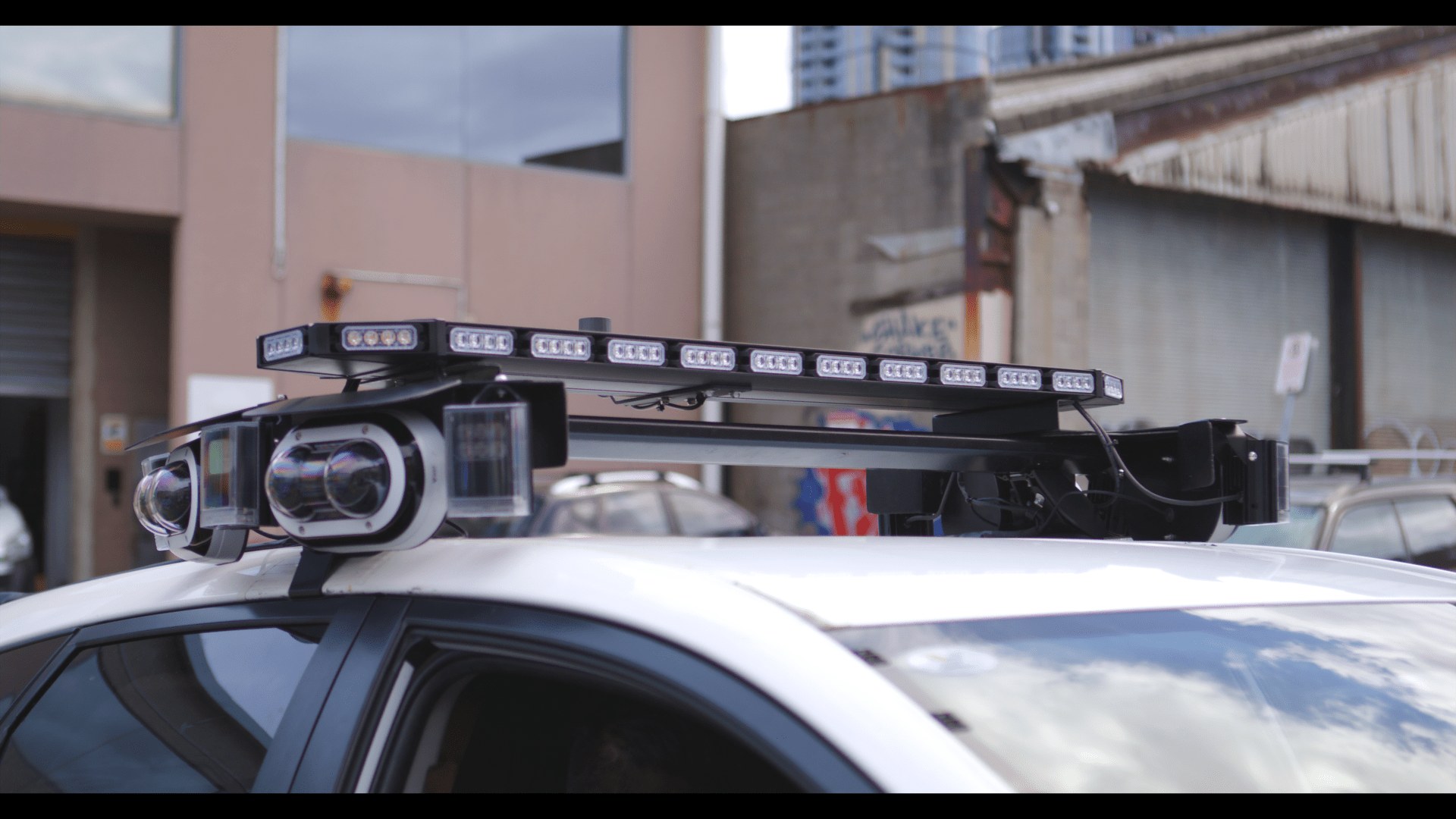
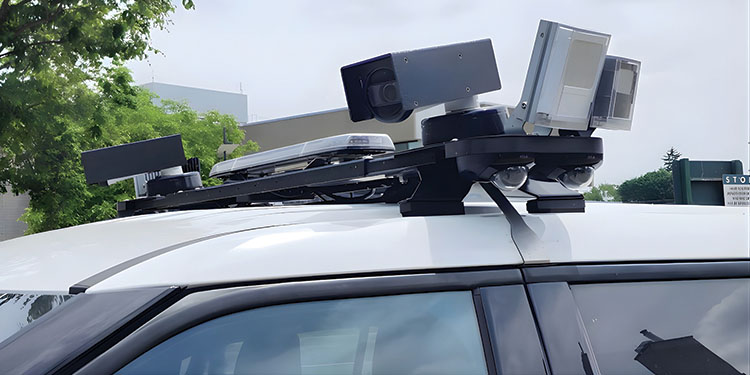
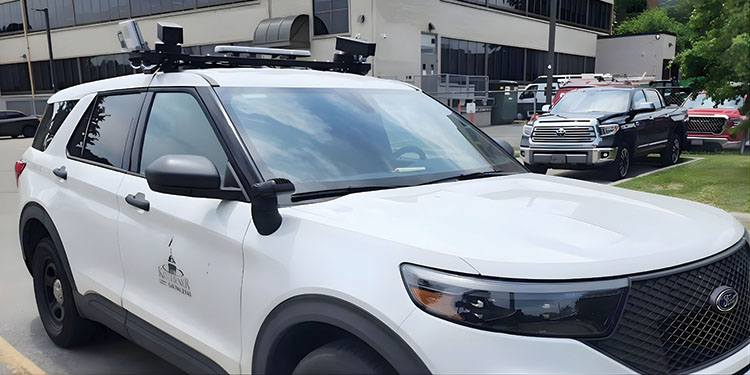
At a practical level, these systems combine inputs from cameras, mobile sensors, and existing city data sources, using machine learning to interpret what is happening on the street in real time. Rather than simply recording violations, they continuously analyze vehicle movements, location context, and regulatory conditions to determine whether behavior is compliant.
Recent deployments, including expanded AI-driven parking enforcement programs across the Canadian province of Ontario, show how quickly this shift is taking hold. What starts at the curbside is becoming something much larger: a foundation layer for modern digital infrastructure.
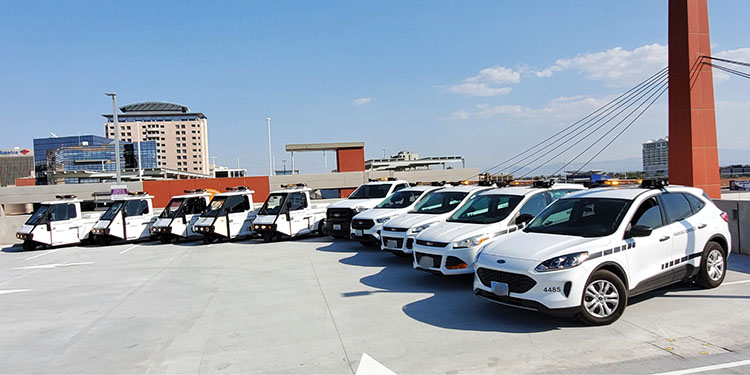
Cities are beginning to recognize that enforcement systems, when powered by artificial intelligence (AI), are not just regulatory tools. They are one of the most immediate and scalable ways to build real-time visibility across urban environments.
The curb as a data system
Every infringement captures more than a violation. It reveals demand pressure, behavioral patterns, and infrastructure gaps. And while individually, these signals are minor, at scale they form a continuous data stream that reflects how a city actually functions.
AI-powered enforcement systems make this possible by structuring and validating this data in real time. They link visual detection with location accuracy, time-based rules, and payment or permit systems, turning fragmented observations into usable intelligence.
For government agencies, this changes the role of enforcement entirely, moving it from retrospective action to real-time operational awareness.
This can be described as “live awareness,” or the ability to understand and respond to physical environments as they change. Not through static reports or delayed analytics, but through continuous, contextual intelligence.
In practice, this is already emerging across high-density municipal networks in North America, where clustered deployments are creating a connected view of curb activity across multiple jurisdictions, rather than isolated snapshots within a single city.
Cities that adopt this approach are going beyond simply improving compliance, to build a live operational layer across transport networks, public spaces, and critical infrastructure.
Why traditional models don’t scale
Urban growth is outpacing the capacity of traditional enforcement. Manual patrols, static cameras, and legacy license plate recognition systems were not designed for dynamic, high-density environments. They capture fragments of activity, not the full picture.
This creates three persistent challenges for government:
• Coverage gaps in high-demand zones such as schools, loading areas, and transit corridors
• Inefficient resource allocation, with officers deployed reactively rather than strategically
• Limited data integrity, restricting the ability to inform broader policy decisions
AI-enabled systems address these constraints directly, through a combination of computer vision, sensor fusion, and real-time processing that can identify vehicles, interpret signage, understand spatial context, and cross-check multiple data sources simultaneously.
In dense environments, where GPS signals are unreliable or rules change by location and time of day, this layered approach is critical. Systems are no longer relying on a single input but validating events through multiple streams of data to ensure accuracy.
This is particularly evident in large, complex urban corridors like the Greater Toronto Area, where overlapping municipal boundaries and high traffic density demand a more unified, data-driven approach to enforcement.
Precision is no longer optional if enforcement is to be fair, defensible, and effective.
From compliance to capability
The most important shift is not technological. It is conceptual. When enforcement data is treated as infrastructure, its value extends far beyond fines. Curbside intelligence can inform:
• Traffic flow optimization and congestion reduction
• Safer school zones and pedestrian environments
• More efficient freight and delivery access
• Accessibility improvements for aging populations
In fast-growing regions, this becomes a force multiplier as governments can expand coverage and improve outcomes without proportionally increasing headcount or cost.
Across Ontario, for example, this approach is enabling municipalities to move from isolated enforcement zones to coordinated coverage across entire urban corridors, improving both efficiency and consistency of outcomes. The system begins to guide decision-making, not just enforce rules.
Fairness, trust, and public acceptance
Despite a persistent concern that more advanced enforcement leads to more punitive systems, in practice, the opposite tends to occur.
When rules are applied consistently and transparently, behavior changes, repeat offences decline, and compliance improves without escalation. AI plays a role here by standardizing how rules are interpreted and applied, reducing human variability and ambiguity in enforcement decisions.
For governments, this approach is crucial because public trust is shaped not only by outcomes, but by the perceived fairness of the system delivering them. This is why privacy, auditability, and clear policy frameworks must evolve alongside technology. Without them, even the most capable systems will struggle to gain acceptance.
A foundation for broader government transformation
The implications extend well beyond parking. Once a city establishes real-time awareness across its streets and assets, new opportunities emerge.
Municipalities have already uncovered significant value by digitizing and mapping existing infrastructure, from unregistered assets to under-utilized public space. In some cases, this has recovered or optimized tens or hundreds of millions of dollars in value.
More broadly, the same intelligence layer can support:
• Emergency response coordination
• Public safety monitoring
• Infrastructure maintenance planning
• Environmental and emissions management
What begins as a targeted deployment evolves into a cross-agency capability. We are seeing this happen in Ontario, where the expansion of curbside intelligence across interconnected cities is beginning to demonstrate how this capability can extend beyond enforcement into broader urban system management.
From local deployments to global standards
Lessons learned in one jurisdiction are now informing others, accelerating adoption and standardization. The Toronto corridor is becoming a live example of how scaled, multi-city deployments can function as a unified system rather than a collection of pilots.
This exchange is shaping a new model of urban management, one built on continuous awareness rather than periodic oversight.
Rethinking what infrastructure means
For decades, infrastructure has been defined in physical terms — roads, bridges, utilities, and the like — but that definition is now expanding.
Data, when collected responsibly and used effectively, is becoming operational infrastructure in its own right, and the curbside is one of the most accessible starting points. It is where policy meets behavior, where demand is most visible, and where small inefficiencies compound into system-wide challenges.
Governments that recognize this are laying the groundwork for cities that can see, understand, and respond in real time, and that changes everything.
SUBHASH CHALLA is the founder and CEO of SenSen.AI. He can be reached at subhash.challa@sensen.ai.