
How the Public Parking Authority of Pittsburgh used ticket-by-mail to expand coverage, give street sweepers six hours back a day, and turn every patrol pass into a curb-data stream.
Ticket-by-mail did three things for Pittsburgh that no amount of additional officers could have done. It expanded enforcement coverage across the city without growing headcount. It gave the city’s street-sweeping operation six hours back every day. And it turned every patrol pass into a curb-data stream that is now starting to shape policy.
Today the program runs across the Authority’s surface lots, smart loading zones, and street-cleaning routes. Sixteen patrol vehicles are on the road, with on-street meter and residential-permit enforcement next. Every citation is reviewed by a person before it issues, with a court-ready evidence package behind it. SenSen supplies the AI detection and curb-digitization layer. The Authority’s enforcement partner gtechna supplies the citation workflow and back-office systems.
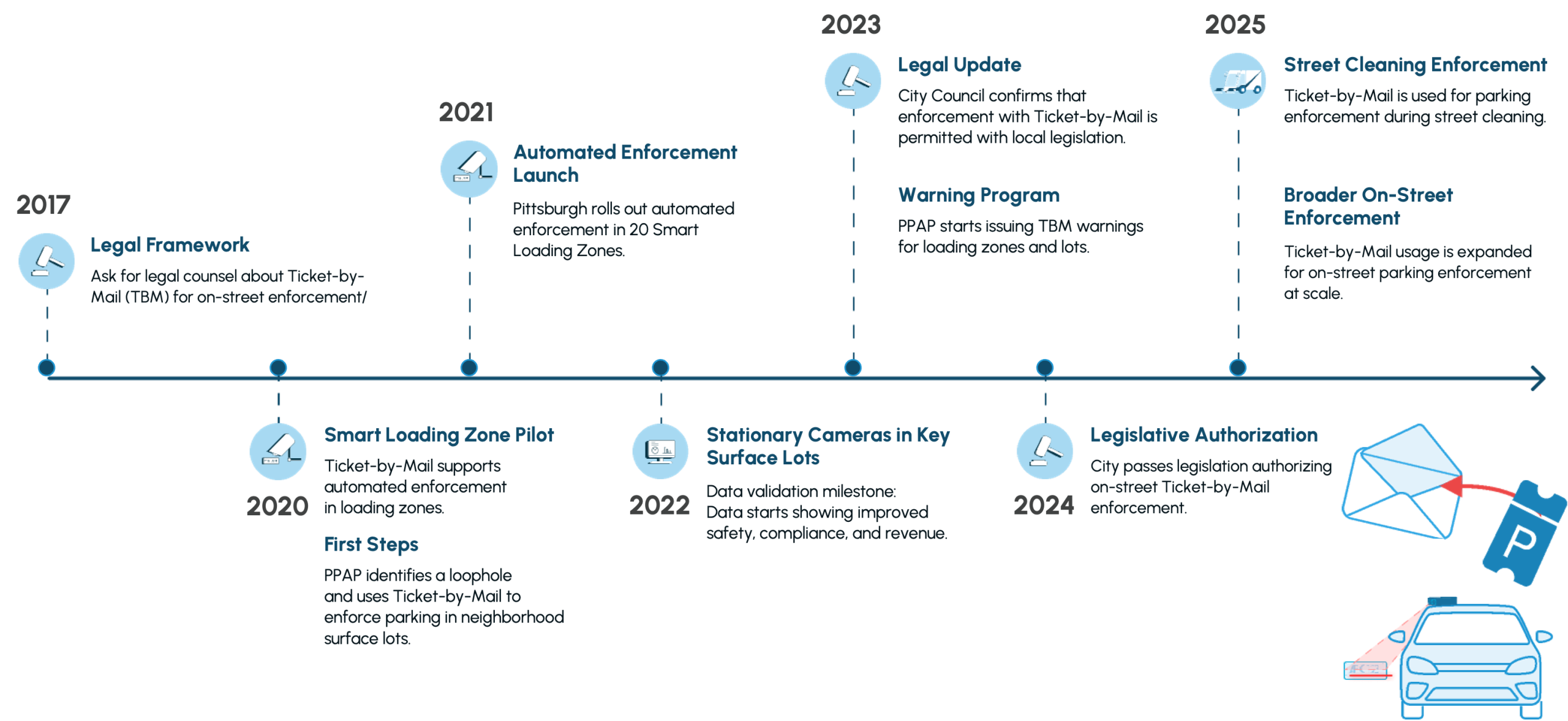
The eight years from 2017 to 2025 were almost entirely about getting the legal authority in place: state legislation, city council approval, and the parallel work to align state and city law. The operational rollout, once the authority was confirmed, was fast. This post is the working playbook behind it. What ticket-by-mail unlocks for cities, why most automated enforcement still falls short, how the Pittsburgh program works end to end, and what becomes possible once the curb is digitized.
What is ticket-by-mail parking enforcement?
Ticket-by-mail is a parking-enforcement workflow where an automated system detects a violation, captures court-ready evidence, and mails the citation to the registered vehicle owner instead of placing it on the windshield. A human reviewer approves every ticket before it issues. Officers stay on patrol; the back office handles dispatch.
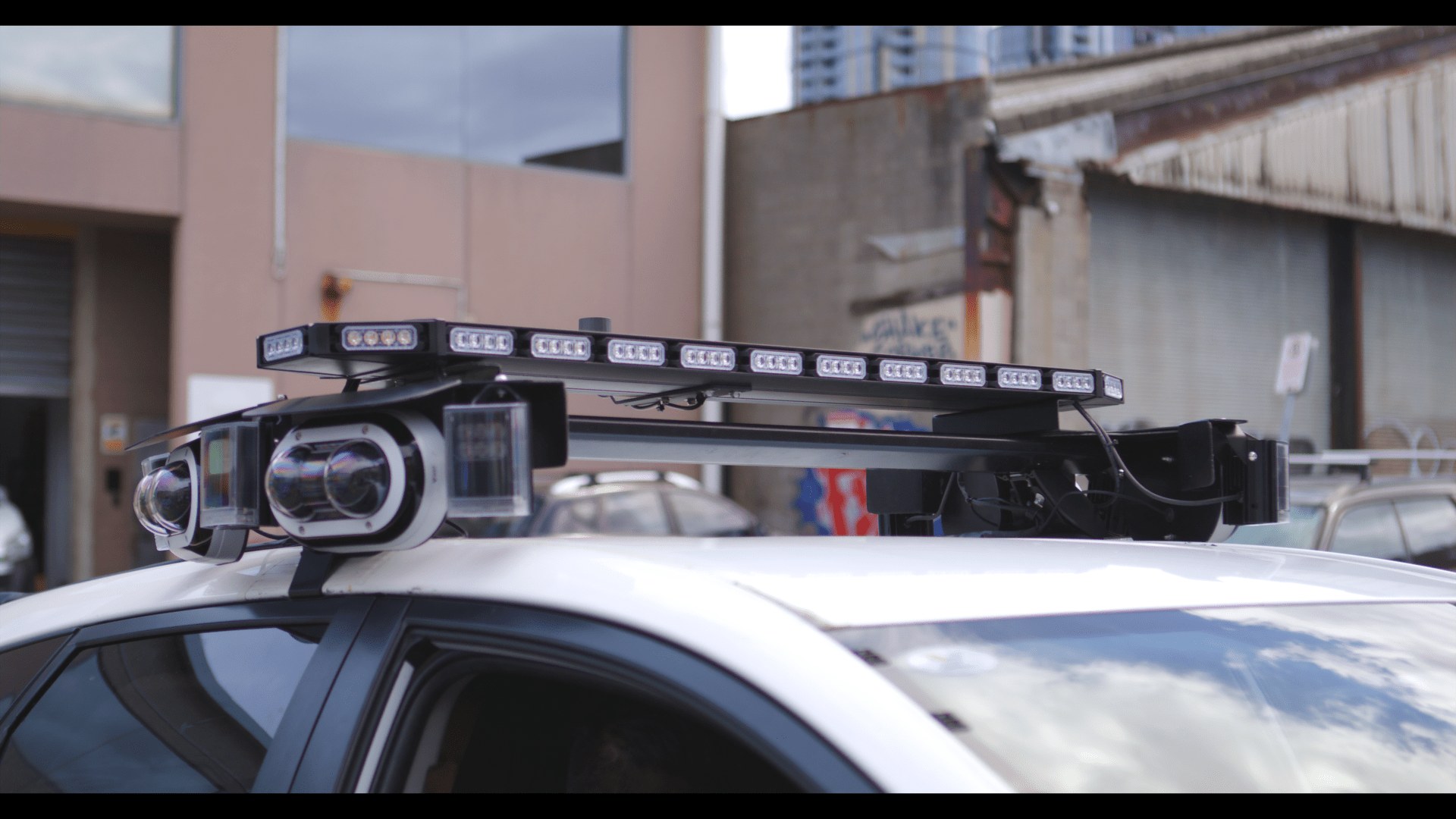
In Pittsburgh’s case, the workflow starts the moment a SenSen-equipped patrol vehicle drives past a parked car. The system reads the plate, captures multi-angle evidence, and matches each vehicle to the exact rule that governs that block at that time of day. Alerts flow to a cloud back office where trained ticket-by-mail reviewers approve every alert before it becomes a citation. Approved citations export to the gtechna citation system. That system generates the mailed notice with the Authority’s logo, payment instructions, and the evidence images on the back.
Pittsburgh sets a 30-day payment window and a 40-day escalation, adding 10 days to its on-windshield deadlines to absorb postal delay.
Why couldn’t Pittsburgh enforce the whole city before ticket-by-mail?
The short answer is officer count against network size. Pittsburgh runs about 7,850 on-street metered spaces, another 1,550 off-street spaces, 12 parking facilities, 39 residential-permit areas, and a downtown core that draws roughly 130,000 commuters a day. Manual windshield issuance caps coverage at the pace of a person walking.
Three constraints stood out before the program. Officers had to physically see the street sweeper to issue a street-cleaning ticket, which slowed both the sweeper and the route. Surface lots went under-enforced when COVID staffing thinned the team. And overnight enhancement districts required police escorts for officer safety, which limited how often crews could go out at all.
Matt Jendrzejewski, Director of Enforcement and Meter Services at the Public Parking Authority of Pittsburgh, put it plainly at the IPMI 2026 Learning Lab. “Now DPW and the city are able to save up to six hours daily with street sweeping and they’re able to finish their entire routes.” Ticket-by-mail removed the on-foot issuance step. Officers stay behind the sweeper because the evidence is captured automatically, and the city’s full sweeper route now finishes on time every day. The same pattern repeats elsewhere in the program: removing the windshield step releases capacity the city already had.
Why does most automated parking enforcement still fall short?
Most automated enforcement reads two things. A license plate, and whether that plate appears on a payment list. That is enough to catch unpaid bays and expired sessions. It is not enough to catch the safety-critical rules that share the same block: no-stopping zones at peak, loading-zone overstays, bus and bike lanes, fire-hydrant clearances, crosswalk approaches, and school-zone variants.
The result is a two-tier curb. A handful of rules get enforced consistently. The rest are enforced when an officer happens to walk past. That breadth gap is the part most ticket-by-mail programs leave on the table.
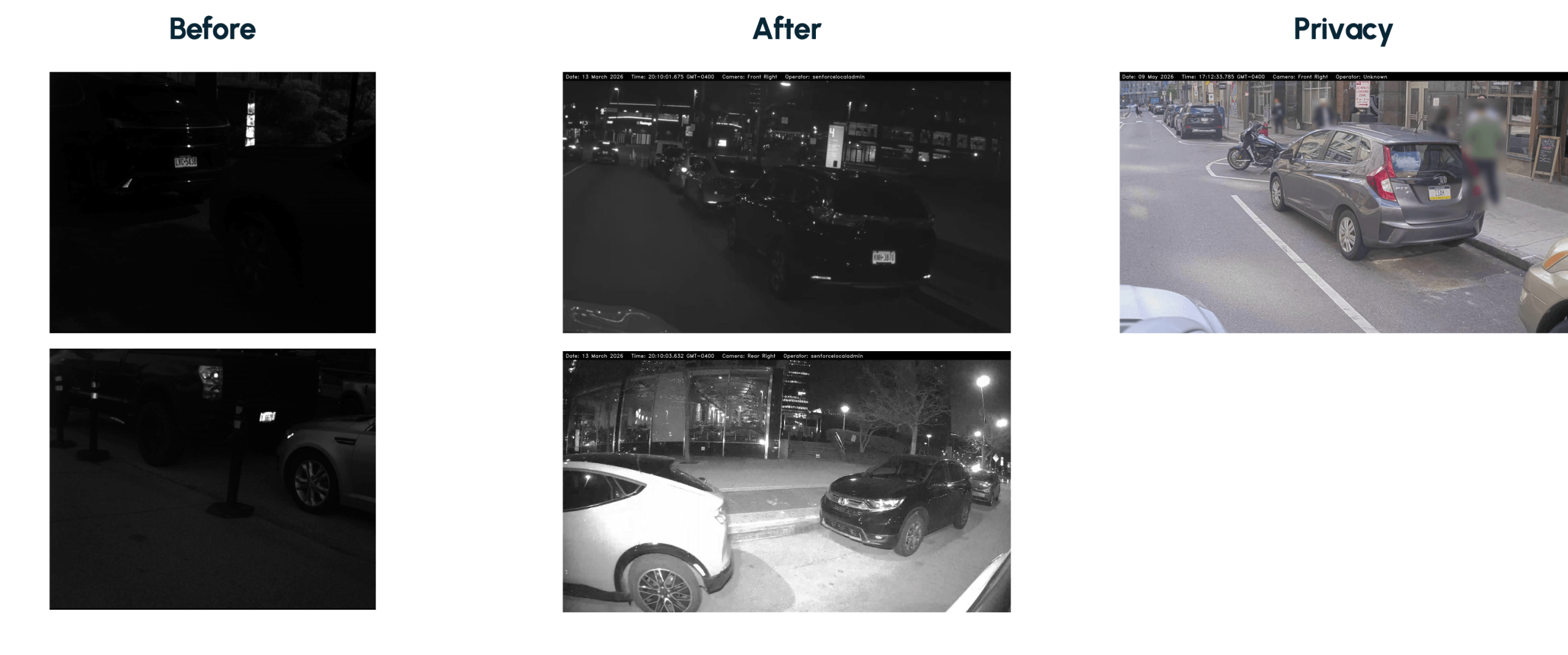
Three other failure modes show up in the field. Night-time evidence often fails: older LPR systems return dark, unreadable frames. GPS drifts in dense downtowns by tens of metres. And evidence packages without context (a governing sign, a wheel valve stem, a defensible timestamp) collapse on appeal. Pittsburgh hit all three with its prior equipment. The new units fix all three. Cameras are configured for night legibility. A visual positioning layer holds up where GPS will not. And the back-office workflow is built around the evidence package, not the citation itself.
How did Pittsburgh scale ticket-by-mail from pilot to citywide?
Pittsburgh built a deliberate scaling path where each phase unlocked the next opportunity. Smart loading zones came first, generating the city’s first continuous curb-occupancy data. Live mailed citations followed across 20 of those zones in 2021. Surface-lot stationary cameras in 2022 closed an enforcement gap that COVID-era staffing had opened. The state’s confirmation of on-street authority in 2023 cleared the legal runway for everything that came after. Street cleaning launched in 2025 as the first on-street category, immediately freeing six hours a day for the DPW sweeper routes.
Street cleaning was a deliberate first on-street choice. Every vehicle eligible to receive a street-cleaning ticket is in violation by definition (the rule is “move your car when the sweeper comes”). That tight scope let the program demonstrate end-to-end results quickly: cleaner streets, completed routes, and a workflow that residents, officers, and the parking court could all see working. Jendrzejewski described it as “the perfect example for this because everybody who was receiving a street cleaning ticket was in violation for that ticket.” Expansion across meters, residential permits, and overnight districts now sits on a base the city has already shown is working.
How does ticket-by-mail work end to end in a city like Pittsburgh?
Six capabilities sit underneath every ticket Pittsburgh mails. Together they make the program defensible, fair, and easy to scale.
First, the system already knows which rule applies to which block at which time, without an officer telling it mid-route. Second, it filters noise so the reviewer sees only real candidates. Third, the evidence package is court-ready by default: clear plate read, scene context, governing sign, timestamp, and matched zone. Fourth, privacy is enforced at source. Faces are blurred. License plates not involved in the violation are blurred. Fifth, payment timelines absorb postal delay. Pittsburgh added 10 days. Sixth, the issuing authority is unmistakably visible on the envelope, so residents recognize the mailer immediately. Pittsburgh added the Parking Authority logo to every mailer to make that signal crisp.
Our VP of Clients and Markets for North America, Ben Pisch, summarized the role of the AI layer at the same session. “AI isn’t here to replace. It’s just here to simply support.” That framing tracks the operating model in Pittsburgh. AI handles three jobs the human cannot do at scale: knowing which rule applies where, filtering false reads, and assembling the evidence package. The judgment call stays with the reviewer.
How does ticket-by-mail evidence hold up on appeal?
Ticket-by-mail produces a stronger evidence package than a handheld officer can. Every mailed citation in Pittsburgh ships with two images on the back: a wide context shot that places the vehicle on the street, and a clear plate read. Both go through privacy treatment at source. Faces are blurred. Bystanders are blurred. License plates not involved in the violation are blurred. The package also includes a timestamp, GPS coordinates, the matched rule, the matched zone, and (where relevant) the governing sign.
That depth is what makes appeals straightforward. Nobody likes getting a ticket and some residents will contest. The evidence package gives the magistrate everything they need to confirm the violation, and gives the resident the same picture before the appeal even happens. Pittsburgh’s appeal volumes have stayed manageable because the citation explains itself.
The upgrade is visible at night. Older Pittsburgh units returned dark images where plates appeared as black smudges. The current SenSen units capture clear day and night frames at speed. The evidence carries the citation, not the other way around.
How does AI support officers without replacing them?
Pittsburgh did not cut a single position when it launched ticket-by-mail. The program repurposed work, it did not eliminate it. Trained ticket-by-mail reviewers now approve every alert before it issues. The officers who used to walk routes now patrol a much larger footprint.
Jendrzejewski said it directly. “AI does not did not reduce our manpower. It empowers the team.” Two outcomes follow from that operating model. The program covers more of the network with the same headcount. And a person stays in the loop for every citation decision, which is the part of the workflow that has to remain human-led for the program to read as fair.
The role of the AI layer is narrower than the headline suggests. It handles the work that does not scale with people: knowing which rule applies where, filtering the false reads, and building the defensible evidence package. Officers and reviewers own the judgment.
What rules can a ticket-by-mail program enforce beyond meters?
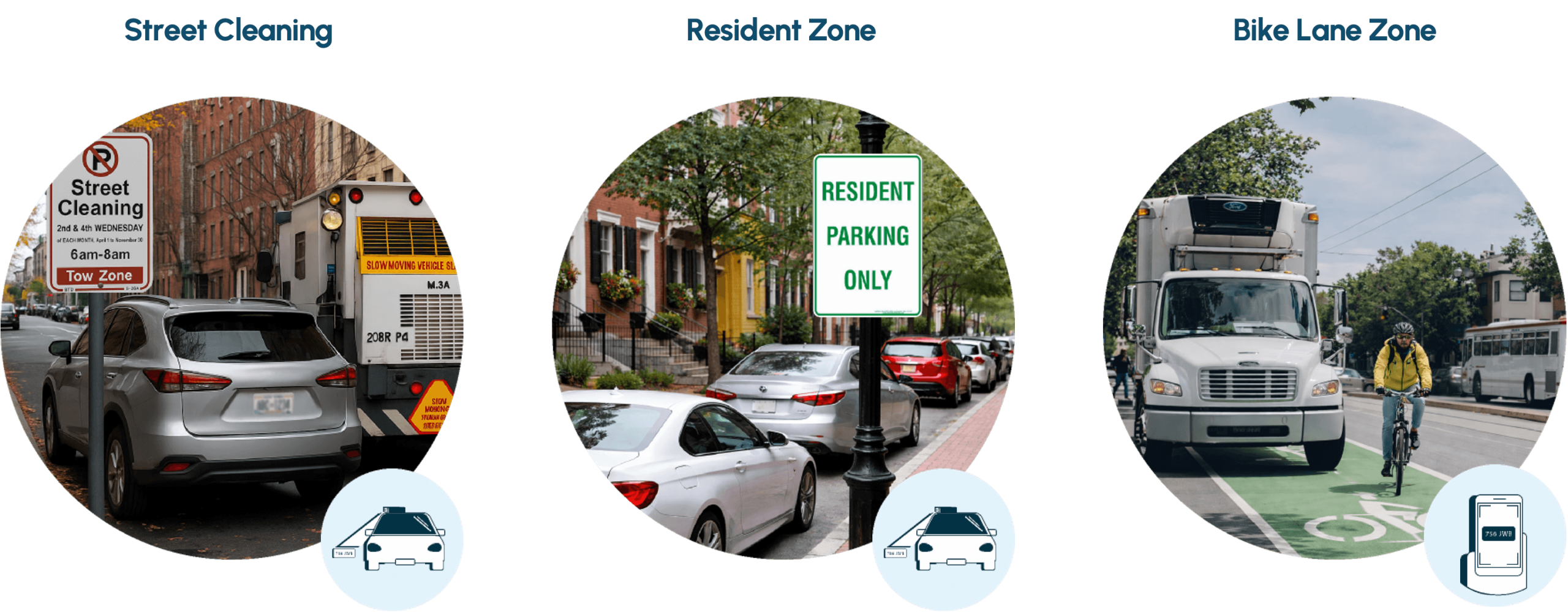
Pittsburgh’s phase-one scope covers paid parking, residential permits, bike lanes, and street cleaning. Phase two extends to crosswalks, fire hydrants, yellow curbs, rush-hour clearways, and no-parking zones. That is not theoretical. The same detection model is already running in production across categories like these in 60+ cities across North America and Australia.
A representative production rule set, drawn from those deployments, covers:
- Time-limit overstays (15-minute, 1P, 2P, 3P, 4P) using digital chalking
- Residential and visitor permit zones
- Accessible (disability) bays
- No-stopping signs, continuous yellow edge lines, and clearways
- Bus zones and bus stops (within 20m before / 10m after), taxi zones
- Loading zones with differentiated dwell (2-minute, 20-minute, 30-minute, commercial vs passenger)
- Mail zones, works zones, truck zones, shared zones, safety zones
- Bus, transit, truck, bicycle lanes and paths
- Intersection setbacks (10m unsignalized, 20m signalized), pedestrian crossings, children’s crossings, level crossings
- Footpaths, nature strips, painted islands, driveway and footpath-ramp access
- Fire-hydrant offsets, postboxes, bridges, crests, slip lanes
- Bay-position and orientation (angle parking, direction of travel, straddling lines)
- Heavy-vehicle dwell limits in built-up areas
- School-zone variants tied to school times
- EV-bay enforcement (stopping in a charging area when not an EV or not plugged in)
- Littering and dumping from vehicles
For Pittsburgh, the implication is direct. The same fleet of 16 vehicles that catches a meter overstay today can catch a hydrant block, a no-stopping breach, or a school-zone violation on the same pass. That is what whole-curb enforcement means in practice.
What does whole-curb data unlock once you’re scanning every day?
A single ticket-by-mail vehicle running a typical day reads roughly 2,500 plates assigned to zones. Multiply that by 16 vehicles, and the city is generating a curb-occupancy stream every operating hour. That stream is useful long after the citation question is closed.
Ben made the point that compliance is a two-direction read. As ticket-by-mail drives compliance up in one category (paid parking, where the citation cost is now consistent), it reveals where compliance is lower in adjacent categories the city has never measured before. Occupancy patterns, dwell times, and hotspots feed back into beat assignment, staffing decisions, loading-zone design, and curb policy. The Toronto Parking Authority and Las Vegas Curbside Management already operate on this model. Pittsburgh is now collecting the same data daily.
The pattern is consistent across SenSen deployments. The same patrol pass that enforces also surveys. Cities that previously had point-in-time studies start to see how the curb performs across the day and week. That is the difference between a static parking inventory and a living curb data layer.
How does ticket-by-mail build public trust over time?
Three deliberate moves by Pittsburgh have made the rollout land well with residents.
First, the Authority made the mailer impossible to mistake. The Parking Authority logo and a clear message above the fold tell residents exactly who is writing and why. That single piece of design shifted the mailer from “easy to overlook” to “easy to act on”, which matters because the city wants residents paying within the first window, not the escalation window.
Second, the Authority paired every rollout step with a public communication. When surface lots launched, when street cleaning launched, when each on-street expansion launched, the city heard about it through media releases and council communications. Each message framed the change as safety and fairness, not revenue, which is the framing the program actually delivers on.
Third, predictability drives voluntary compliance. As Ben put it, residents see the consistent presence of patrol vehicles and adjust. Paid-parking compliance rises across the city. The city then sees where compliance is lower in categories it never measured before, and can allocate enforcement to those areas. That feedback loop is what pays the program back over time.
How should a city design a ticket-by-mail program that scales?
Five design choices separate ticket-by-mail programs that scale from those that stall.
First, secure the legal authority early and treat it as the long pole. Pittsburgh’s path ran through both the state legislature and city council, with the bill confirmed in 2023. Operationally, the rollout was quick once authority was in place.
Second, lead with the evidence package. Day and night image quality, accurate positioning, blurred bystanders, and a clear chain from rule to zone to vehicle are what make the program defensible from day one and easy to scale into safety-critical rules later.
Third, keep a human reviewer in the loop. Pittsburgh’s trained ticket-by-mail review team is the credibility anchor that lets the city automate detection without automating the judgment.
Fourth, pick a first on-street category where the unlock is obvious. Pittsburgh chose street cleaning because every eligible vehicle is in violation by definition, and the result (six hours a day back for DPW) is something the whole city can see. Surface lots, smart loading zones, and overnight permit districts work for the same reason: each releases real capacity on day one.
Fifth, design the data layer in from the start. Occupancy, dwell, and compliance patterns are the long-run value of any ticket-by-mail program. Collect them, route them to the teams that can use them, and the program pays back across enforcement, planning, and policy.
Where does this go next for US cities?
Pittsburgh is part of a wider pattern. Las Vegas operates dynamic curbside enforcement and analytics. Toronto runs SenMAP for road and curb data. Chicago Parking Meters has run mobile LPR enforcement at scale for years. The shared move is the same: digitize the curb once, enforce the full rulebook, and treat the data layer as a planning asset.
For a parking manager evaluating ticket-by-mail today, the question is not whether the technology works. It is which first on-street category will release the most operational capacity in the first 90 days. Pittsburgh picked street cleaning and got six hours a day back. The next city’s first unlock will look different. The pattern is the same.
See how SenSen enforces the whole curb on a single pass, with court-ready evidence built for appeals. Read the curb enforcement use case or talk to the team.
Frequently asked questions
What is ticket-by-mail parking enforcement?
A workflow where an automated detection system captures a parking violation, a human reviewer approves the citation, and the ticket is mailed to the registered owner instead of placed on the windshield.
Does ticket-by-mail replace parking officers?
No. Ticket-by-mail does not cut staff, it repurposed work. Officers cover a larger footprint, and officers review every ticket before it issues.
How accurate is automated license-plate recognition under real conditions?
Daytime ALPR accuracy approaches 100% in typical conditions. Adverse weather and night-time conditions reduce accuracy unless the hardware and AI models are built for low light. Pittsburgh replaced earlier units that returned unusable night frames.
Can ticket-by-mail citations be appealed?
Yes. Cities can route disputes to parking court for review by district magistrates, with municipal court as the next step. The strength of the appeal hinges on the evidence package: clear plate read, scene context, timestamp, GPS, and matched rule.
What rules can a ticket-by-mail system enforce besides paid parking?
In production today, SenSen-powered programs enforce time limits, residential and accessible permits, no-stopping zones, bus/taxi/loading zones, bike and transit lanes, intersection and crosswalk setbacks, fire-hydrant and driveway clearances, school-zone variants, EV-bay rules, and bay-position orientation.