
Every AI License Plate Recognition (LPR) vendor will claim strong plate accuracy.
But plate accuracy alone does not improve enforcement outcomes, increase compliance, or protect public trust.
For city leaders and parking authorities, the real question is not whether a system can read licence plates — it’s whether that system improves enforcement results while standing up to operational, legal, and public scrutiny.
Traditional LPR systems typically deliver only part of what modern parking enforcement requires — roughly 40 points out of 100 — because they focus on plate recognition rather than full-scene intelligence. The remaining value comes from context awareness, AI-driven decision support, and defensible evidence capture.
As cities evaluate LPR technology, here are ten questions that separate legacy systems from truly modern enforcement platforms.
1. Does the system capture context — or only licence plates?
Plate OCR is useful, but enforcement requires more than text recognition.
Modern AI LPR systems must capture:
– Windscreen permits
– Disability placards
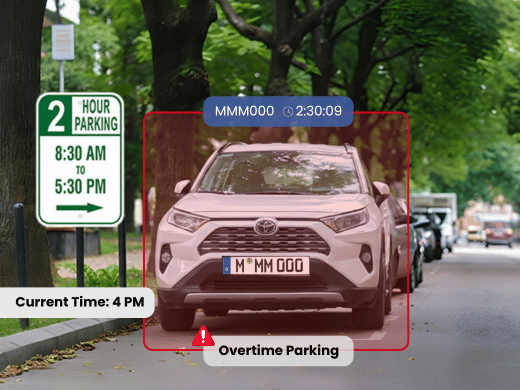
– Parking signage
– Vehicle orientation
– Position relative to curb
– Driver presence or absence
Context-aware systems create a “virtual walkthrough” — delivering the same information an officer gathers on foot, but at driving speed.
The difference is simple: one system collects data, the other captures evidence.
2. Can the platform reduce disputes before they occur?
False positives and weak evidence increase administrative costs and erode trust.
AI-powered enforcement platforms generate multi-angle, timestamped evidence packages with precise GPS context. Cities deploying context-aware systems report dispute reductions of approximately 20–30% due to clearer, more defensible citations.
The goal of modern AI enforcement is not more tickets — it’s better, defensible tickets.
3. Can enforcement continue when conditions aren’t ideal?
Parking enforcement rarely happens in ideal conditions.
Vehicles may have temporary permits, obscured plates, unusual positioning, or complex rule overlays. Traditional LPR sees only plate characters. AI scene understanding interprets the entire parking scenario, not just text recognition.
The result is fewer blind spots and stronger enforcement coverage.
4. Is enforcement performance consistent at night and in poor lighting?
Nighttime and low-light enforcement is not optional.
Legacy infrared-based systems often capture plates but lose detail after dark. Modern AI LPR platforms use colour imaging and intelligent illumination to preserve contextual evidence across all lighting conditions, ensuring the same standards apply day and night.
Consistency strengthens deterrence and legal defensibility.
5. Can the system understand and enforce complex parking bylaws?
Parking rules have evolved far beyond simple time limits.
AI-driven parking enforcement must interpret:
– Vehicle-type restrictions
– School zones
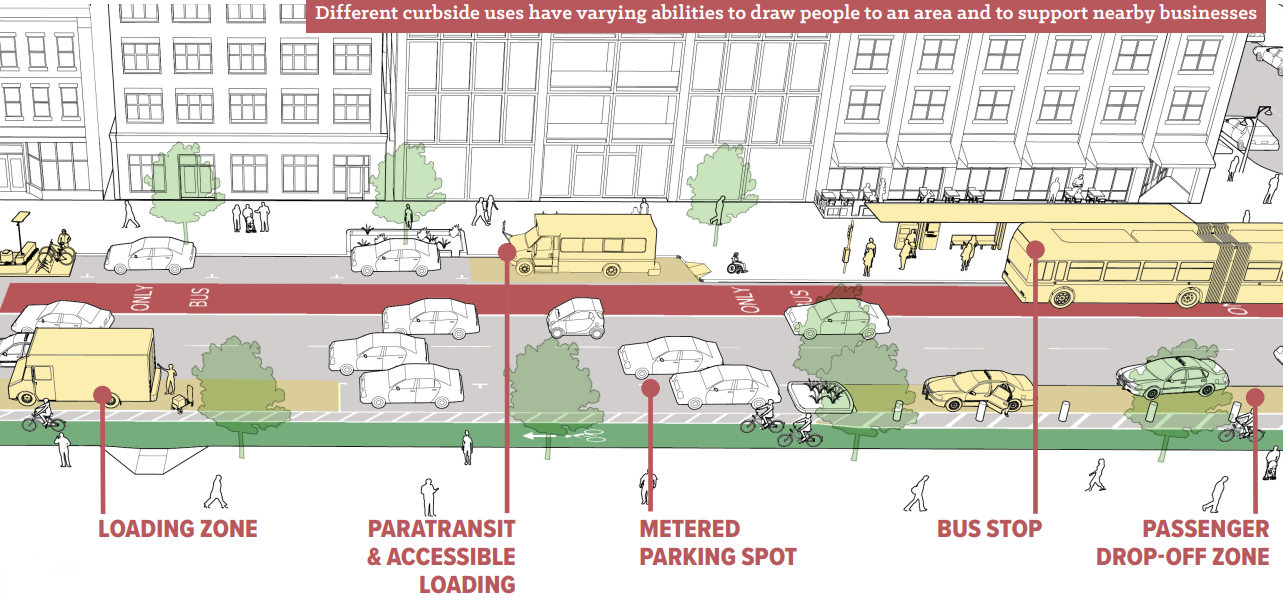
– Loading zones
– Orientation rules
– Time-of-day restrictions
– Temporary regulations
Advanced platforms combine computer vision with rule engines to automatically enforce complex, evolving bylaws in real time.
Technology should simplify regulatory complexity — not add to it.
6. Are citations backed by legally defensible evidence?
A single plate image is rarely enough to withstand appeals. Weak evidence creates risk for cities and frustration for citizens.
Context-aware enforcement systems automatically compile comprehensive evidence packages including:
– Multi-angle colour images
– Signage context
– Precise location data, even in urban canyons
– Timestamps
– Vehicle positioning
This allows officers and reviewers to make confident decisions and dramatically reduces overturn rates — often below 5%.
When evidence is complete, disputes decline naturally.
7. Does the system improve officer productivity?
Technology should augment officers — not overwhelm them.
Deployments of context-aware systems demonstrate productivity improvements of up to 400%, with enforcement vehicles scanning hundreds of vehicles per hour compared to foot patrol or phone-based LPRs.
AI acts as a co-pilot:
– Detecting violations automatically
– Filtering edge cases
– Compiling evidence
– Presenting recommendations for officer approval
This preserves human judgment while dramatically improving efficiency.
8. Can it support broader city objectives beyond enforcement?
By continuously capturing curbside imagery, system create a living asset inventory without additional survey programs, cities gain:
– Real-time infrastructure visibility
– Asset condition tracking
– Historical records for compliance audits
This transforms enforcement fleets into mobile data platforms supporting broader urban operations.
9. Is the system built for long-term adaptability?
Parking rules evolve. Technology must adapt just as quickly.
Software-defined enforcement platforms allow cities to update bylaws, adjust rule parameters, and deploy new AI capabilities without replacing hardware.
Future-ready systems reduce long-term upgrade costs and protect investment.
10. Does the system deliver on-ground measurable outcomes?
Ultimately, results matter more than specifications.
Across deployments, context-aware AI parking enforcement has demonstrated:
– 30–45% reduction in missed violations
– Significant reduction in disputes and complaints
– Higher compliance rates
– Faster ROI through productivity gains
– Stronger legal defensibility
These outcomes show that enforcement technology succeeds when it balances fairness, productivity, and accountability.
The Right Questions Reveal the Right Enforcement Platform
Choosing an LPR system is not about purchasing cameras. It is about defining how enforcement will operate over the next decade.
Pseudo AI-powered systems stop at plate reading, while modern context-aware enforcement delivers the full 100-point standard by capturing complete scene context, supporting officer decision-making, and generating defensible evidence that protects cities and communities alike.
For cities managing growth, evolving regulations, and increasing public scrutiny, enforcement technology must deliver more than accuracy.
It must deliver clarity, consistency, and accountability.