Parking enforcement software is often procured as a technology solution. In practice, it becomes something far more influential: an operational framework that shapes how a city enforces its kerbside, deploys staff, manages compliance risk, and defends outcomes under scrutiny.
Most councils do not deliberately choose rigid enforcement models. They select systems to address immediate needs, modernising enforcement, improving compliance, or increasing efficiency. Over time, however, those systems become embedded. Patrol routes adapt to hardware. Policies are simplified to fit system constraints. Exceptions are handled outside the platform.
What begins as a software decision gradually becomes an operational dependency. SenSen’s curbside enforcement platform is built from the ground up to avoid this trap, supporting mobile, fixed, and handheld enforcement from a single unified system so cities are never locked into one form factor.
The issue is not poor technology choices.
It is that many parking enforcement platforms are built on a single-system assumption, while cities operate as inherently multi-system environments.
Enforcement Is an Ecosystem, Not a Single Tool
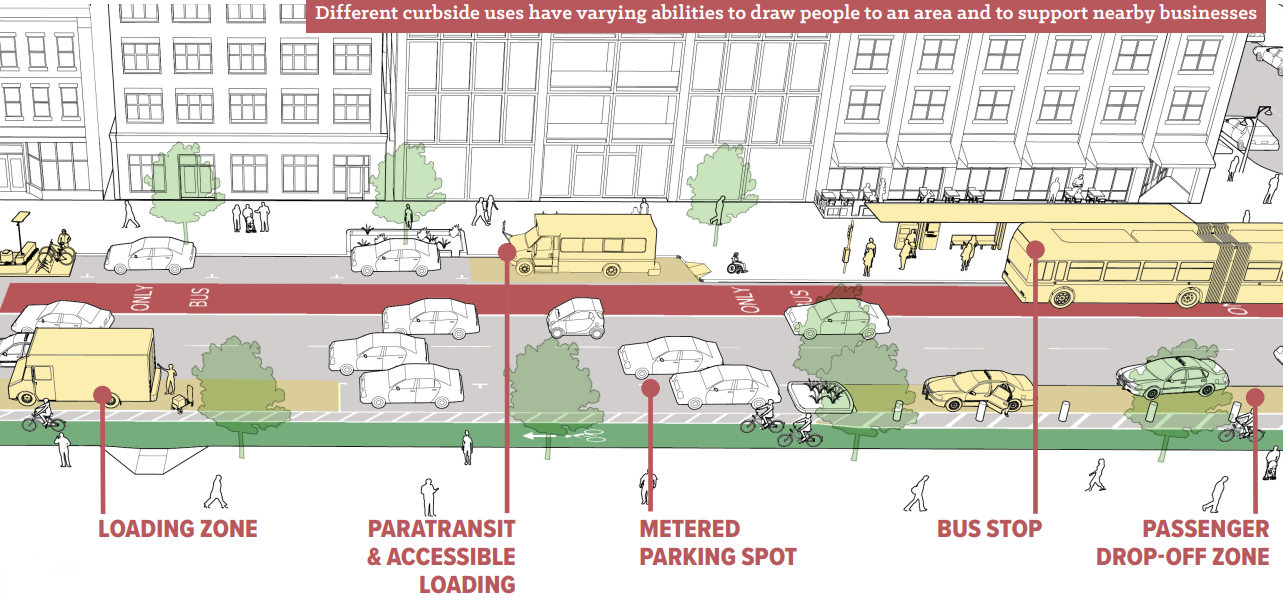
Modern parking enforcement spans a wide and shifting range of contexts: high-turnover retail streets, residential permit zones, school areas with time-critical rules, event precincts with temporary controls, and mixed-use curbside spaces that change by time of day. Understanding how each of these spaces is actually being used, not just enforced, is what live curb awareness is designed to deliver.
No single capture method or device performs equally well across all of these environments. Yet many parking enforcement systems are architected as though one modality can do so.
Platforms designed around a single enforcement form factor—vehicle-mounted, fixed, or handheld—inevitably optimise for that form factor. Everything else becomes an exception rather than a first-class capability.
Over time, those exceptions accumulate, and operational friction follows.
How Single-System Thinking Creates Enforcement Blind Spots
Single-system platforms influence operations in subtle but consequential ways.
Patrol routes are designed around where the system performs best, not necessarily where enforcement demand is highest. Certain violations are prioritised because they are easier to capture. Areas that fall outside the system’s ideal conditions receive less consistent attention, even when compliance issues persist.
These blind spots rarely appear in dashboards.
They appear on the street through predictable overstays, declining turnover, and uneven enforcement presence.
Drivers adapt quickly. Compliance behaviour follows enforcement certainty.
The Hidden Cost of Rigid Enforcement Platforms
Rigid parking enforcement software rarely fails outright. Infringements continue to be issued. Reports still generate. Revenue still flows. But cities that also digitise their street-level assets, such as signs, meters, and bollards through city asset management, gain a more complete operational picture and reduce the hidden costs of infrastructure blind spots.
The cost emerges elsewhere.
Officers work around system limitations. Back-office teams reconcile data across disconnected tools. Appeals take longer because evidence standards vary by capture method. Decision-makers lose confidence in what enforcement data actually represents.
What appears efficient at a system level introduces friction at an operational level.
Why Feature Lists Miss the Real Risk
Procurement processes often focus on features: automation rates, detection accuracy, analytics, and integrations.
What they rarely assess is adaptability.
Can the platform support multiple enforcement modalities without fragmentation? Can enforcement shift between zones without redeploying infrastructure? Can policy changes be applied consistently regardless of how evidence is captured?
If the answer is no, the software will eventually constrain the operation—regardless of how advanced its feature set appears.
What Flexible Parking Enforcement Software Does Differently
Flexible parking enforcement software starts from a different premise: cities will change.
Rather than being built around a single device type, flexible platforms are built around enforcement rules, evidence standards, and policy logic. Capture methods adapt to street-level context, while compliance criteria remain consistent.
In this model:
Vehicle-mounted systems provide scale
Fixed infrastructure delivers consistency in defined zones
Handheld enforcement supplies adaptability where conditions shift
All operate within a shared operational and evidentiary framework.
The outcome is not increased complexity. It is operational resilience.
Integration Is the True Differentiator
True flexibility depends on integration depth, not surface-level compatibility.
Permits, payments, exemptions, infringements, and evidence must be validated in real time regardless of enforcement method. Evidence standards must remain consistent across all capture types. Back-office workflows must not fracture based on device or deployment model.
Platforms that lack this integration force councils to choose between coverage and consistency.
Credible platforms remove that trade-off.
How SenFORCE RDK Aligns with a Modern Software Model
SenFORCE RDK is designed to complement existing enforcement environments rather than replace them.
Supporting handheld enforcement on council-approved smartphones and tablets, it extends enforcement reach into areas that vehicle-based and fixed systems cannot reliably cover without introducing data silos or parallel workflows.
Evidence captured through handheld enforcement is time-stamped, location-verified, and standardised within the same enforcement intelligence layer as other modalities. Policy logic, compliance rules, and reporting remain consistent across the entire network.
This allows councils to deploy the right enforcement form factor for each environment without compromising data integrity or operational cohesion.
Preserving Optionality as Cities Evolve
Cities are rarely static for long.
Kerbside priorities shift. Staffing models change. New transport modes emerge. Budget pressures fluctuate. Enforcement demand rises and falls unevenly across locations.
Parking enforcement software that assumes stability eventually becomes a constraint. Software designed for adaptability preserves optionality, allowing councils to respond without restarting procurement cycles or undermining enforcement credibility.
Software Should Follow the City — Not the Other Way Around
The most resilient parking enforcement platforms do not dictate how cities operate. They adapt to how cities actually function.
The critical question for councils is no longer “Which system works best today?”
It is “Which platform will still make sense when our city looks different?”
Single-system thinking cannot answer that question.
Flexible, multi-modular parking enforcement software can.