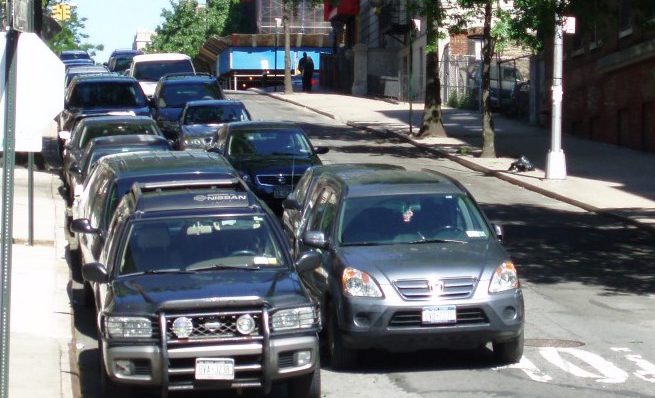
Double parking is rarely treated as an infrastructure problem. It sits at the operational edge of most cities, visible, persistent, treated as something to police rather than something to design around. That framing is becoming outdated.
What’s emerging across municipal networks in North America is a different reading of the issue. Double parking, in this view, is not primarily an enforcement failure. It’s a visibility gap. Cities cannot enforce what they cannot continuously see, and they cannot allocate curb space efficiently against demand patterns they do not measure. The behaviour that ends up labelled as a violation is, more often than not, a rational response to curb space that was designed for the city fifteen years ago.
This reframe matters because it changes what cities should actually be procuring. The conversation is shifting from how do we issue more citations to how do we build live curb awareness as a continuous operational capability. In practice, that shift is already underway.
Why double parking is a visibility problem first, and an enforcement problem second
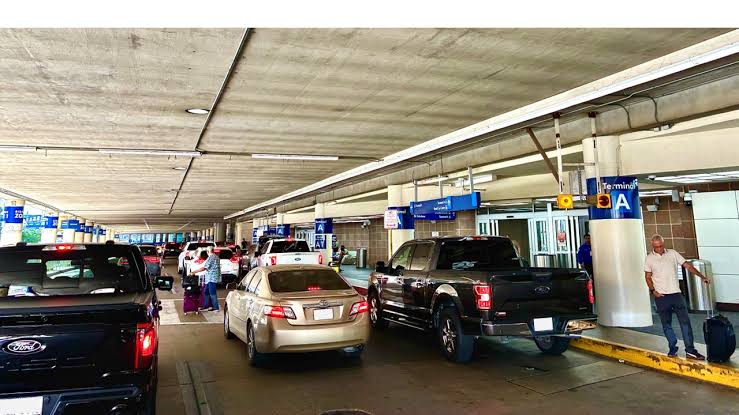
Curb demand has changed faster than the systems cities use to measure it. Rideshare, last-mile delivery, food courier networks, and e-commerce volumes have all expanded in parallel, and the curb is where they collide. The commercial loading window designed in the 1980s now competes with the delivery economy of the 2020s on the same painted strip of pavement.
Cities are aware of the surface symptom. What’s less obvious is the data gap underneath it. Most municipalities still allocate curb space based on assumptions set years ago: a loading zone designated for 8 AM to 5 PM, a no-standing rule applied uniformly along a corridor, and a metered block treated as a single asset. Real-world usage rarely matches the assumption. Demand peaks shift block by block, hour by hour, season by season.
Three pressures compound the visibility gap.
Concentrated rideshare activity. Curbside pickup is now an expected platform behaviour. Apps direct drivers to the address, not to the nearest legal stop. In dense commercial areas with limited legal space, the result is concentrated violation hotspots rather than dispersed offences.
Time-pressured commercial operators. Couriers and delivery drivers working 100-plus stops per shift cannot afford to circle for legal parking. When the loading zone is occupied by a private vehicle, a brief illegal stop becomes the only path to staying on schedule. The behaviour is structural, not individual.
Inconsistent enforcement signal. When violations are detected unevenly across locations and time windows, drivers calibrate accordingly. A coverage gap of forty percent common across many municipal patrol patterns is enough to make the illegal option the default option.
Together, these dynamics produce what looks like a discipline problem and is, on closer inspection, a measurement problem. The city sees outcomes. It does not see the demand pattern, the occupancy curve, or the violation density. Without that visibility, enforcement is reactive by design.
Why manual coverage cannot scale
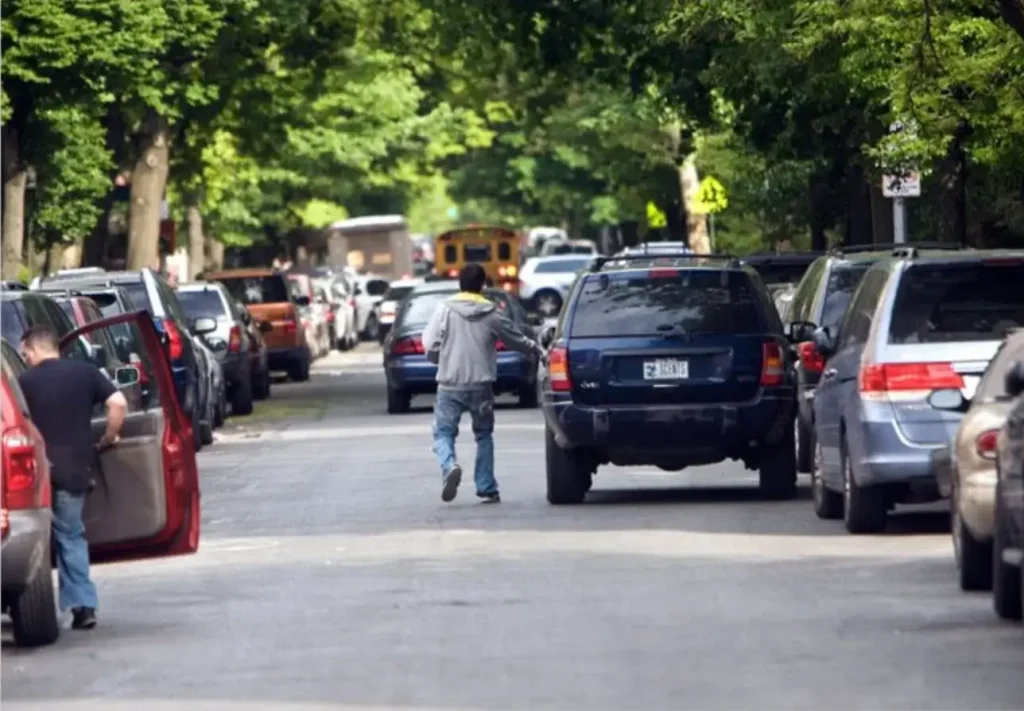
Manual enforcement is not failing because there are insufficient officers. It is failing because the underlying mismatch is structural.
Violations are shorter than the enforcement cycle. Most double-parking events last between two and five minutes shorter than the observe-approach-issue window a foot or vehicle officer needs. By the time an officer acts, the vehicle has cleared.
Coverage is geographically dispersed and simultaneous. Officers can be in one place at a time, while violations occur across multiple blocks at once. Even a well-resourced shift leaves significant portions of the regulated network uncovered at any given moment.
Roadside confrontation carries a real cost. Direct enforcement places officers in tension with drivers under time pressure. Cities are increasingly weighing this against the citation outcome and finding the trade harder to justify.
These limits are not solvable through hiring. There are limits to a model single-officer, point-in-time observation that no longer match the volume, speed, or distribution of violations. What is required is continuous operational awareness across the regulated network, not more patrols across the same gap.
From enforcement-only to live curb awareness
The shift cities are now making is not towards more enforcement. It is towards a different operational layer underneath it.
Live curb awareness describes the continuous capability to monitor, interpret, and respond to curb activity in real time. It treats the curb as a managed, dynamic asset, not a static set of painted lines. In this model, enforcement becomes one output of a broader data system, alongside curb allocation, demand forecasting, and operational planning.
Three policy moves are visible across cities adopting this approach.
Dynamic curb rules by time of day. Blocks operate under different rules at different windows: delivery-only in the morning, paid parking midday, and no-standing during peak transit. This works only when monitoring is continuous; otherwise, the rules become invisible to the drivers expected to follow them.
Dedicated rideshare and delivery zones. Designated pick-up and drop-off areas at high-demand hubs reduce the concentration of double parking in active travel lanes. Their effectiveness depends entirely on whether non-eligible vehicles can be detected and moved when they occupy these zones.
Continuous monitoring at high-impact hotspots. Fixed and mobile detection systems generate evidence at the locations where the operational impact is highest, such as bus corridors, loading zones, and emergency vehicle routes. Coverage shifts from sample-based patrol to continuous observation at the points that matter most.
In each case, the underlying capability is the same: the city sees what is happening on the curb continuously, and the system applies the rules automatically based on time, location, and context.
What automated curb monitoring actually does
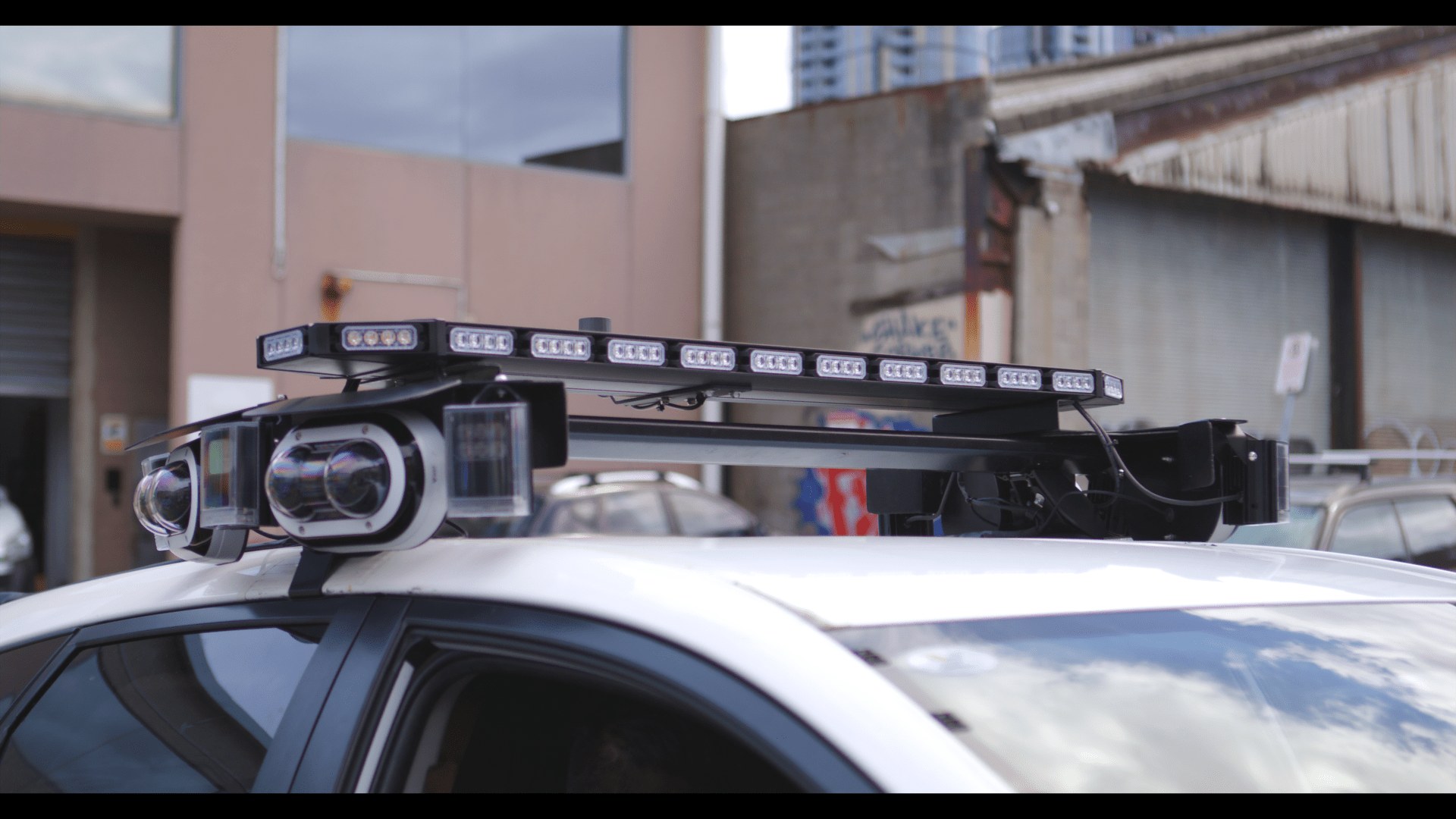
The technology layer beneath live curb awareness combines vehicle-mounted detection, fixed pole cameras, and a central rules engine that interprets the regulation in context.
The detection workflow is now well-defined enough to be described in five steps:
- Scan. Mobile and fixed sensors capture vehicle licence plates, positioning, and contextual imagery in real time as vehicles enter, occupy, or leave a regulated zone.
- Cross-reference. Captured data is checked against the active rule set for that block at that moment, no-standing, loading-only, time-restricted, residential, based on precise GPS location and current time window.
- Flag. If a breach is identified, the system compiles a timestamped evidence file with verified coordinates, applicable regulations, and privacy masking applied.
- Review. Enforcement officers validate the violation remotely from a back-office workflow, removing the need for roadside interaction.
- Cite. Once approved, citations are issued through secure DMV-linked workflows, typically by mail.
Two characteristics matter operationally. The detection cycle runs faster than the violation itself. And every vehicle is assessed against the same ruleset regardless of officer presence, weather, or time of day. This is the mechanism by which live curb awareness produces enforcement consistency without expanding patrol headcount.
What measurable outcomes look like
Across municipal deployments of continuous curb monitoring, a consistent operational profile has emerged. These outcomes are drawn from in-market deployment data and vary by jurisdiction and configuration.
- Detection accuracy in the range of 95–98 percent across loading zone, no-standing, and bus lane violations
- Patrol coverage expansion of three to four times across the same shift footprint
- Citation disputes have decreased by approximately 40 percent, attributed to the quality of court-ready evidence
- Pre-deadline payment rates above 50 percent, reflecting the predictability of detection
- Compliance behaviour change measured within the first two quarters of deployment
The financial profile is now generally understood: continuous monitoring systems are deployed in six to eight weeks under an annual subscription, without significant upfront capital. The procurement question is no longer whether the technology works. It is whether the operational model is ready to use the data it generates.
Visibility is the prerequisite, not enforcement
Double parking will not be solved by enforcing harder. It will be reduced by cities that treat the curb as a managed asset and build continuous visibility into how that asset is used.
The cities now leading on this are not the ones with more officers. They are the ones building live curb awareness as an operational layer beneath enforcement, generating data on demand patterns, allocating curb space against actual use, and applying rules consistently across the network. Enforcement becomes a byproduct of a better-managed system, not its primary expression.
For US cities now evaluating how to respond to the double-parking problem, the practical question has moved. It is no longer about how we cite more. It is what it would take to see the curb continuously, and what would change if we could.
SenSen Networks works with municipal agencies on curb intelligence deployments across North America, Australia, and Asia-Pacific.
FAQs
Why is double parking getting worse in US cities?
Curb demand has grown faster than enforcement capacity and curb-space design. Rideshare, food delivery, and e-commerce drive sustained illegal stopping in dense urban areas. The underlying issue is a visibility gap that cities cannot allocate or enforce against demand patterns they do not continuously measure.
How do cities enforce double parking today?
Three approaches operate in parallel: officer patrol for visible deterrence, fixed cameras at high-violation locations, and vehicle-mounted ALPR for network-wide coverage. The most effective municipal programs combine all three, with continuous detection providing the consistency that manual patrol cannot deliver.
What technology detects double parking automatically?
Automated detection uses vehicle-mounted ALPR systems and fixed pole cameras to capture violations in real time. Evidence routes to a central back-office where officers review remotely and issue citations by mail. The technology resolves the speed and coverage limits of manual enforcement.
Why can’t manual enforcement keep up with double parking?
Most violations last two to five minutes shorter than an officer’s observe-approach-issue window. Officers cover one location at a time while violations occur simultaneously across blocks. The mismatch is structural and cannot be closed by hiring more enforcement staff.
What is live curb awareness?
Live curb awareness is the continuous capability to monitor, interpret, and respond to curb activity in real time. It treats the curb as a managed, dynamic asset rather than a static rule set, enabling cities to allocate space, enforce consistently, and plan against actual demand patterns.